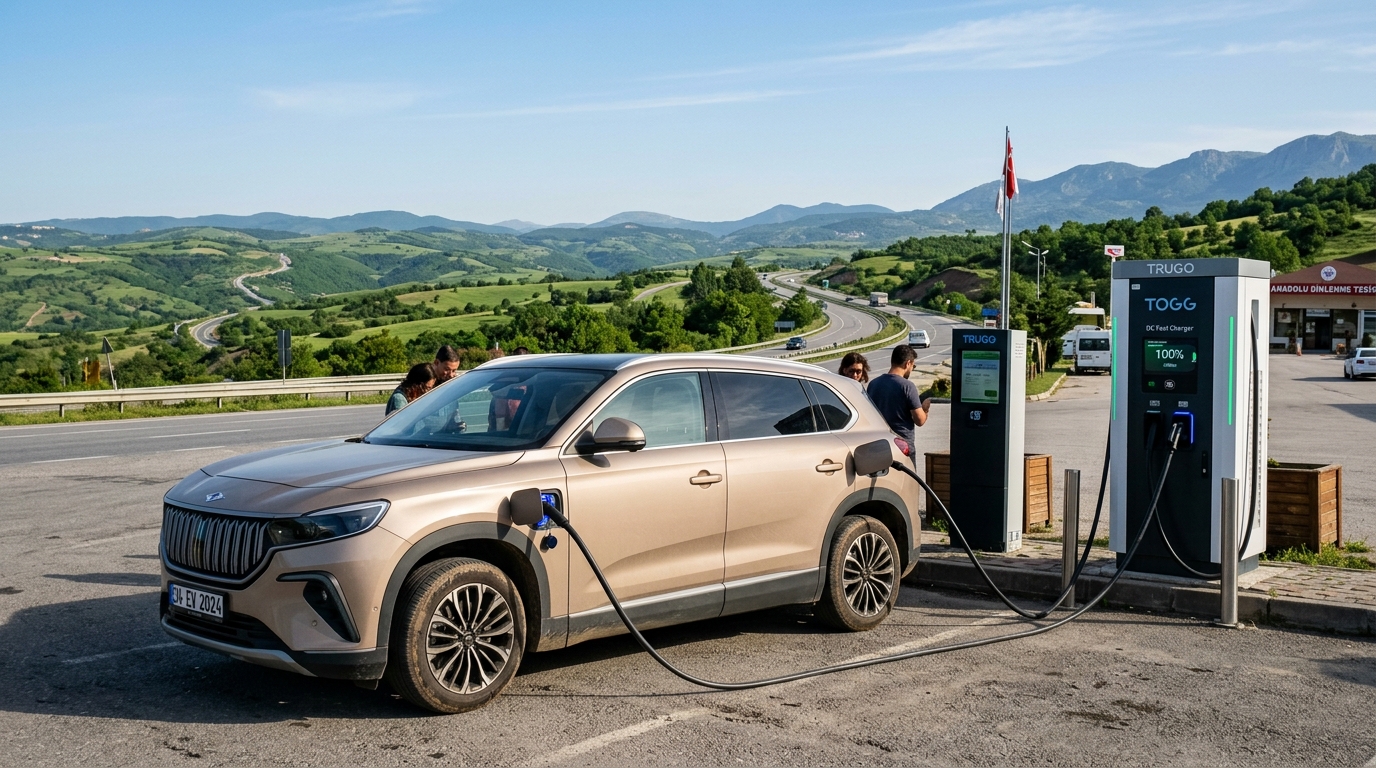
# TOGG and Atlas of Travel Routes with Charging Stations for Electric Vehicles: 81 Provinces Range Carefree Travel Guide
!TOGG and Atlas of Travel Routes with Charging Stations for Electric Vehicles
As the world automotive industry bids farewell to the century-old dominance of fossil fuel internal combustion engines, Türkiye; With the launch of its local and national smart device TOGG on the roads and the widespread charging infrastructure established simultaneously, it has become one of the countries in Europe that has adapted the fastest to electric mobility. Exhaust fumes, engine noise and high fuel costs are now replaced by exhaust fumes, engine noise and high fuel costs during intercity journeys; It leaves you with the pleasure of silent, environmentally friendly and high-torque electric driving.
However, going on long journeys with electric vehicles requires a different travel philosophy and planning intelligence than traditional fuel habits. The biggest question mark in the minds of drivers is "Range Anxiety"; It is completely eliminated thanks to the correct battery charging strategy, the correct selection of 180 kW+ ultra-fast DC stations and the integration of break timing with local cultural stops.
In this guide, prepared byMemleketim, together with Energy Market Regulatory Authority (EPDK) licensed charging operators (Trugo, ZES, Eşarj, Astor, Voltrun, etc.), electric vehicle user clubs and field test teams; It offers users the "Turkey Electric Vehicles Charging and Travel Atlas", extending from Edirne to Kars, from Sinop to Hatay.
1. Electric Vehicle Dynamics: The Charging Curve and the 80% Rule
The first rule to know when driving a long distance with an electric car is that the charging speed of the battery is not linear. While lithium-ion batteries are charged with maximum power (150-180 kW DC) when empty (for example, at 10%-20% level), when the battery charge exceeds 80%, the current intensity drops dramatically (reduces to 30-40 kW level) in order to protect cell health.
Standard Range (52.4 kWh)
Trugo 180 kW DC charging time from 20% to 80%: Approx. 26 minutes. Ideal harmony with a tea/coffee break every 200 km between cities.
Long Range (88.5 kWh)
Trugo 180 kW DC charging time from 20% to 80%: Approx. 28 minutes. It easily crosses the Istanbul-Bursa-Balıkesir or Ankara-Afyon range with a single charge.
Gold Charging Principle
Instead of waiting 45 minutes at stations to charge the battery to 100%, reaching 80% and hitting the road saves more than 1 hour in total travel time.
2. Turkey's 5 Main Electric Travel Corridors
The frequency of charging stations in Türkiye's highway and double road networks has brought traveling with electric cars to the comfort of gasoline vehicles:
Corridor 1: Istanbul - Izmir Highway (O-5 Oxygen Line)
It is Türkiye's most developed artery in terms of electrical infrastructure. Starting from the entrance of Osmangazi Bridge, each Oxygen rest facility (O-37, O-68, O-140, O-200, etc.) has Trugo, ZES and Eşarj ultra-fast DC units with at least 6-12 sockets bi-directionally.- Break Recommendation: Your battery will be ready in 25 minutes while you charge your vehicle at Balıkesir Susurluk or Manisa Akhisar Oxygen facilities and eat proprietary Susurluk toast or Akhisar meatballs.
Corridor 2: Istanbul - Bolu Mountain - Ankara - Cappadocia Line (O-4 and D-750)
An electric vehicle departing from Istanbul can have its first rapid filling at the Highway AVM at the Bolu Mountain pass or at the Trugo stations in Düzce facilities. By using the 180 kW+ charging points on the Kırıkkale Keskin and Kırşehir Mucur route via the Ankara ring road, Nevşehir Cappadocia fairy chimneys can be reached without any range anxiety.Corridor 3: Ankara - Afyonkarahisar - Antalya / Muğla Mediterranean Corridor
It is the most popular holiday line connecting Central Anatolia to the Mediterranean and Southern Aegean.- Critical Junction Afyon: There are more than 20 DC high-speed sockets in the thermal hotel facilities and flavor stops on the Afyonkarahisar ring road. While descending to Antalya Kepez after Sandıklı and Dinar passes, 4-6% additional energy is restored to your battery thanks to regenerative braking on the Çubuk Gorge downhill stage.
Black Sea Coastal Road (D-010)
There are DC stations in districts and fuel stations every 40-50 kilometers along the coast from Samsun to Hopa Sarp Border Gate. Ordu Boztepe exit, Trabzon Akçaabat and Rize Çayeli stops offer charging opportunities with sea views.
Southeast and Eastern Transit Line
Trugo and Astor Charging infrastructure on the Gaziantep - Şanlıurfa - Diyarbakır highway and divided road line has been rapidly completed. Uninterrupted charging points provide service even around the Lake Van basin (Tatvan, Ahlat, Erciş).
3. 6 Golden Driving Principles That Reset Range Anxiety
- Aerodynamic Speed Balance (110 km/h Rule): In electric vehicles, wind resistance increases with the square of the speed. Driving at 140 km/h increases battery consumption by 35-40% compared to 110 km/h. Maintaining a constant speed of 110-120 km/h on the highway maximizes the range.
- Regeneration Management: One-pedal driving mode should be used when descending in mountain passes (Bolu Mountain, Sertavul, Gülek). Instead of heating the brake pads downhill, mechanical kinetic energy is stored as electricity in the battery.
- Battery Pre-heating (Pre-conditioning) in Winter: Cold weather (0°C and below) can reduce the range by 15-20% by increasing the internal resistance of lithium cells. When a DC charging station is selected as a destination from the navigation, the vehicle automatically warms up the battery and reaches the maximum charging speed immediately upon arrival at the station.
- Tire Pressure Control: Correct tire pressure (factory bar value at the vehicle door sill) optimizes rolling resistance. Low pressure means 1-2 kWh extra consumption for every 100 kilometers.
- Air Conditioner and Heater Savings (Seat Heating Strategy): Using seat and steering wheel heating instead of heating the entire cabin to 25 degrees in winter directly heats the body, halving the air conditioning power drawn from the battery.
- Redundant Station Planning: Never arrive at the charging station with 2-3% charge. Plan to reach the station with 10-15% charge; This way, you will have a reserve to reach the next station in case of a possible power outage or malfunction.
4. Turning Charging Time into Homeland Exploration
The age of electric vehicles is radically changing the psychology of travel. In the past, the logic of "fill the tank and gas in 5 minutes" prevailed; Today, 25-30 minutes of charging time encourages people to slow down, breathe and explore their environment.
My Homeland Discovery Platform, closest to your location when you connect to the charging socket:
- Registered Tradesmen Restaurants: Local restaurants cooking beans or fresh manti on wood fire within 200 meters of the charger,
- Historical and Cultural Points: Ulu Grand National Park within a 15-minute walk Mosques, clock towers or ethnography museums,
- Women's Labor and Village Cooperatives: Roadside local producer markets instantly appear on the map.
In this way, while your vehicle stores kilometers, you also store unforgettable memories of your hometown in your soul and palate.
5. Frequently Asked Questions (FAQ)
1. How many times does it take to charge TOGG T10X to go from Istanbul to Antalya?
When you set out with the long-range (88.5 kWh) TOGG T10X with a fully charged battery, it is sufficient to charge it only once (for example, during a 25-30 minute meal break in Afyonkarahisar or Kütahya) during the approximately 700 kilometer Istanbul-Antalya route. With standard range (52.4 kWh) 2 short charging breaks (Bilecik and Afyon) are recommended.
2. Will I wait in line at electric vehicle charging stations?
Except for exceptional busy days such as holidays, waiting times are minimal as highway facilities have 4 to 12 sockets at each station. In addition, the current occupancy status of the sockets can be viewed live and reservations can be made via Trugo, ZES and Eşarj mobile applications.
3. Does fast DC charging shorten battery life?
Modern electric vehicles have advanced liquid-cooled Battery Management Systems (BMS). Using DC fast charging between 20% and 80% only on long journeys, rather than constantly, does not cause any significant damage to battery life.
4. Is there charging opportunity in the Black Sea or Eastern Anatolian plateaus?
DC fast chargers are available in the main valley and town centres. In hostels and boutique hotels in the high plateaus, 11-22 kW AC wall box chargers or three-phase industrial sockets are generally available; The vehicle may be fully occupied during overnight stay.
6. Conclusion: The Roads of the Future Are Illuminated by Electricity and Discovery
Electric mobility is the symbol of modern travel that is in harmony with nature, silent and minimizes the carbon footprint. The charging station network spread across 81 provinces of Turkey proves that no province or district is out of range anymore.
Feel free to hit the road; Determine your route, manage your battery wisely and crown your charging breaks with the unique taste and culture stops of Anatolia. My Hometown Road Assistant is always with you to discover the nearest charging points, verified nearby places and route suggestions throughout your journey!