# Daily Calendar of Turkey's 973 District, Village and Producer Markets: Fresh, Natural and Verified Market Guide from Field to Table
!Turkey 973 District District Village and Producer Markets Calendar
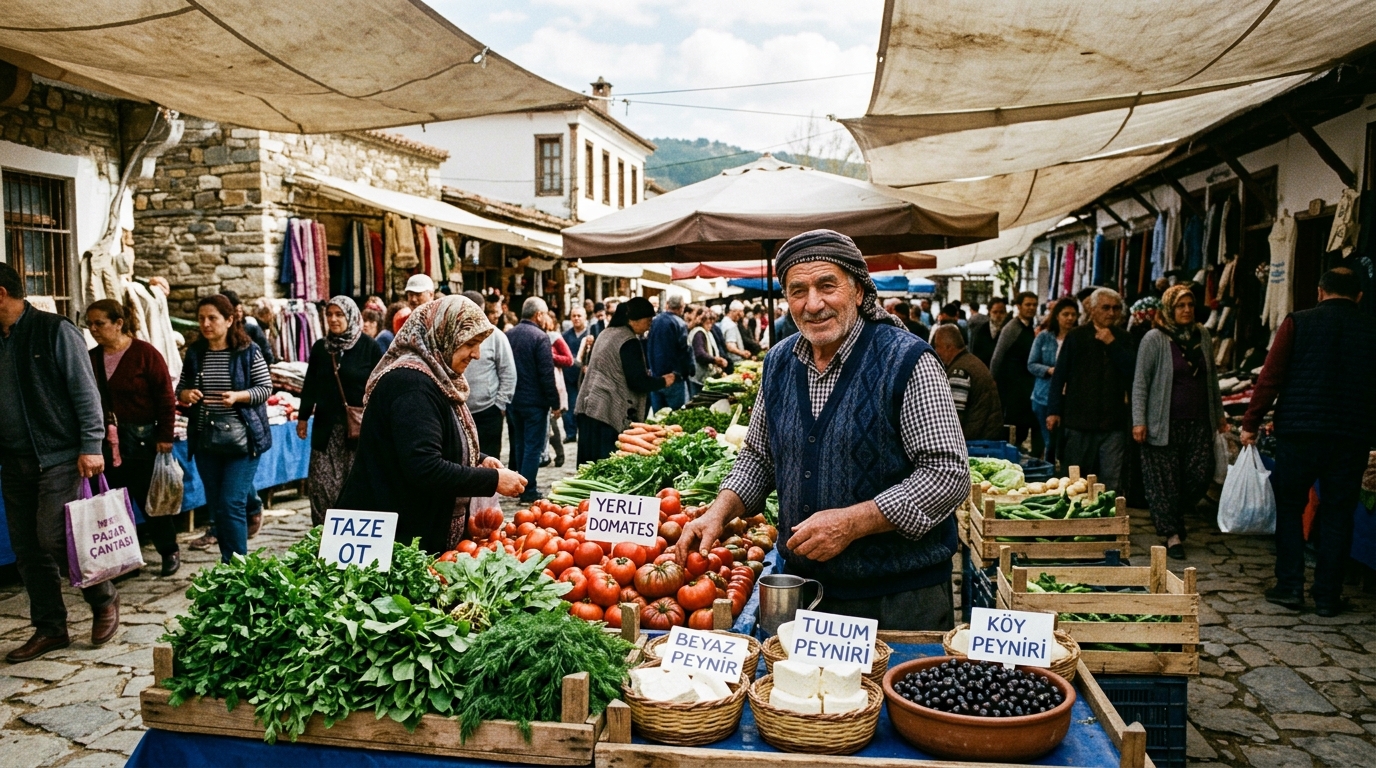
Marketplace in the thousands of years of commercial and social memory of Anatolian civilizations; It is not just a cold exchange area where fruits and vegetables are bought and sold, but a living square where the pulse of neighborhood culture, peasant labor, fresh harvest smell and neighborhood solidarity beats. However, while the giant chain market hegemony brought about by modern urbanization imposes tasteless foods that have been kept in industrial cold storages for weeks on our tables; The information on which district, on which day, on which street a genuine peasant or neighborhood market is held has been lost in the dusty and unupdated pages of the internet.
Citizens' questions such as "Where is there a market in our district today?", "From which producer market can I buy the freshest village eggs and mountain thyme?" or "In which town is the largest herb market in the Aegean held on Tuesdays?" In order to answer the questions, My Memleketim has implemented the "Live Neighborhood, Village and Producer Markets Daily Calendar" project, covering 81 provinces and 973 districts of Turkey.
1. Rebirth of Market Culture: Why Neighborhood and Village Markets?
It is not a coincidence that conscious consumers return to neighborhood and producer markets against the uniform, waxed and aroma-lost agricultural products in supermarket shelves.
Unique values offered by traditional market shopping:
- Daily Harvest and Nutritional Value: Vegetables and greens collected from the branch or field at the first light of the morning reach the market stall within a few hours without being exposed to any chemical preservatives.
- Biodiversity and Local Seed: Ancient local varieties such as pink tomato, Ayaş tomato, Çanakkale watermelon, Tire şevketi orchard, Black Sea kale or Aegean cibez grass, which you can never find in the markets, live in the markets.
- Fair Economy Without Intermediaries: When the producer sells his own product directly, the farmer gets his rights and the consumer protects his budget by getting rid of exorbitant market profit margins.
- Social Touch and Treat Culture: The offer of "sister, try a slice of here" from the market vendors, a bunch of grapes handed to the children and the warm conversation offer a human warmth that the cold barcode sounds of supermarket checkouts can never give.
The exact entrance coordinates of the open street or covered market place where the market is held.
The market is clearly listed on which day, in which neighborhood, and the opening and gathering hours.
The distinction is made clearly between textile, classical fruit and vegetable, producer-peasant market or antique market.
Minibus and municipal bus lines going to the market and car parking facilities are detailed.
2. Comparison: Chain Supermarkets vs. My Hometown Verified Farmers' Markets
Concrete comparison of two shopping models that directly affect consumers' budget and health:
| Evaluation Criteria | Chain Supermarkets | My Hometown Verified District & Producer Sundays |
|---|---|---|
| Freshness and Harvest Time | Products that have been kept in cold storage for 5-20 days | Live crop collected the same morning or the previous evening |
| Price Advantage | High intermediary, packaging and logistics costs are reflected | Directly from producer to consumer 30% - 50% more budget friendly |
| Native Grass and Heritage Seed | Standard industrial greenhouse products only | Regional wild herbs, registered local seeds and cheeses |
| Plastic & Packaging Waste | Excessive consumption of styrofoam and plastic bags | Zero waste shopping culture with market nets and cloth bags |
| Supporting Local Tradesmen | Profits flow to international or national centers | The income remains directly to the district producer and the neighborhood economy |
| Audit and Hygiene | Standard department labels | Municipal police and market registration system approved scale control |
3. Türkiye's Legendary Regional Market Routes
Famous market models established in different geographies of Turkey, each turning into a unique gastronomy and cultural feast:
A) Aegean Herb and Producer Markets (İzmir, Muğla, Aydın, Balıkesir)
- Tire Tuesday Market (Izmir): One of the largest open-air markets in Türkiye and the world. The juices of radicchio, shevketi orchard, nettle, tangle, wild strawberry and black mulberry collected by village women from the mountains are famous.
- Alaçatı Saturday Market (Çeşme): Aegean herbs, artichokes, lavender bouquets and local olive oils meet. point.
- Milas Tuesday Market (Muğla): An ancient market famous for its olive varieties, highland thyme and hand-woven local fabrics.
B) Black Sea Village and Mountain Markets (Trabzon, Rize, Kastamonu, Artvin)
- İnebolu Peasants' Market (Kastamonu): A living legend, held on Tuesdays, famous for the einkorn flour, chestnut honey, bloody mushrooms and village butter that the villagers bring at dawn.
- Vakfıkebir and Tonya Markets (Trabzon): Genuine Trabzon butter, string cheese, kolot cheese and fresh corn flour stalls.
C) Mediterranean and Çukurova Abundance Markets (Antalya, Mersin, Adana, Hatay)
- Antalya Wednesday Market: Fresh citrus fruits, avocados, bananas and goat cheese from the Taurus plateaus.
- Antakya Local Markets (Hatay): Zahter, laurel soap, pepper paste, pomegranate syrup and fresh cheese stalls.
D) Cheese & Grain Markets of Central Anatolia and the East (Konya, Kars, Erzurum, Sivas)
- Kars Gruyere and Kashar Market: Registered Kars kashars and flower honeys fermented with milk collected from high altitude plateaus during the summer months.
- Konya Women Market (Melike Hatun Bazaar): The center of moldy cheese, tulum cheese, obruk cheese and steppe tahini.
4. Smart Market Shopping Guide: How to Tell Quality and Freshness
Tips on choosing the right products for market shopping from Memleketim field experts:
- Early Mornings etc. Evening Sale: 08:30 - 11:00 in the morning is ideal for the freshest and unselected products. For budget-friendly bulk purchases, after 17:00, when the marketers reduce the prices, may be preferred.
- Finding the Producer Who Sells from His Own Garden: Peasant ladies who have small amounts of vegetables in different sizes instead of crates of factory-made uniform products on their stalls are the address of genuine natural agriculture.
- Smell and Weight Test: A good tomato, cucumber or melon first reveals itself with its smell. While vegetables puffed with chemical fertilizers are light for their size, naturally grown crops feel full and heavy when you hold them.
- Seasonal Calendar: Instead of looking for tomatoes or eggplants in winter; leek, spinach, celery in winter; artichokes, asparagus in spring; In summer, turning to field tomatoes and black-eyed peas is the key to health.
5. Ask Artificial Intelligence: Daily Market Search with Memleketim.ai
Citizens can instantly inquire about the market situation in their district in natural spoken language via Memleketim.ai:
> *"Where is the organic street market held in Beşiktaş or Şişli today and until what time is it open?"*
>
> *"On which day is the market held in Urla where I can find genuine olive oil and village bread?"*
Memleketim artificial intelligence engine instantly responds to the current market calendar, directions and the nearest public transportation stop, confirmed by municipality and chamber records.