# Turkey's Most Comprehensive Inventory of Ancient Cities, Mounds and Archaeological Heritage: Open Air Museum Guide from Göbeklitepe to Ephesus
!Turkey's Ancient Cities and Archaeological Heritage Inventory
If one were to choose a single geography on earth where human history began, the first seed fell to the ground, the first temple rose to the sky and the first written peace treaty was signed, it would undoubtedly be Anatolia. Turkish lands; It is not a simple geographical landmass, but the world's largest open-air museum, where hundreds of lost civilizations buried under the layers of the earth, magnificent marble theatres, columned agoras, huge mounds and megalithic obelisks breathe.
While the 12,000-year-old Göbeklitepe and Karahantepe in the Şanlıurfa plains break all the known myths of humanity's transition from hunter-gatherers to centers of faith; Çatalhöyük presents the egalitarian architecture of the first urban settlement. Cuneiform tablets of the Hittite Empire rise in Çorum Hattusa, water channels carved by the Urartians into steep rocks in Van Tuşpa, the mysterious tumulus of King Midas in Gordion, and marble sculpture masterpieces of the Roman and Hellenic worlds in Ephesus and Aphrodisias.
However, many travelers only visit a few popular ancient cities; He remains unaware of the hundreds of registered ruins hidden on the deserted mountain peaks, canyon slopes and behind oak forests of Anatolia. My Memleketim, "The Most Comprehensive Ancient Cities and Archaeological Heritage Inventory"ni, covering all registered archaeological sites, mounds and ancient cities from the Neolithic Age to the Eastern Roman period in 81 provinces of Turkey. prepared.
1. Anatolia Through the Ages: Archaeological Periods and Highlights
The archaeological depth of Anatolia spans a timeline of thousands of years:
Göbeklitepe and Karahantepe (Stone Hills); The beginning of settled life with T-shaped steles and animal reliefs.
Hattuşa, Alacahöyük and Kültepe Kaniş; the first written treaty, Kadesh, monumental lion gates and rock reliefs.
Gordion (Midas Tumulus), Midas Monument (Yazılıkaya Phrygian Valley) and Van Tuşpa Castle; steep rock architecture.
Ephesus, Afrodisias, Sagalassos, Pergamon and Patara; huge theatres, libraries and monumental fountains.
2. Must-See Masterpieces by Region
Ancient cities all over Turkey are in perfect harmony with the geographical topography:
Aegean Region: Marble Sculptures, Libraries and Theaters
- Ephesus Ancient City (Izmir Selçuk): The trade and religious metropolis of the ancient world. Celsus Library, Grand Theater with a capacity of 25,000 people, Hillside Houses and ruins of the Temple of Artemis, one of the Seven Wonders of the World.
- Afrodisias (Aydın Karacasu): Located on the UNESCO World Heritage list, the city where the most talented marble sculpting school of the ancient world was born. Its perfectly preserved huge stadium with a capacity of 30,000 people and its Tetrapylon gate.
- Bergama - Pergamon (Izmir): Acropolis rising on a steep hill, the world's steepest ancient theater, the library where parchment paper was invented and Asklepion, the first health center of the ancient world.
- Hierapolis (Denizli Pamukkale): The healing Phrygian city and huge Necropolis built on white travertines, where you can swim between the columns in the ancient thermal pool.
Mediterranean and Lycian Belt: Democracy Carved in Steep Rocks
- Sagalassos (Burdur Ağlasun): The "City of Loves and Emperors" touching the clouds at an altitude of 1,700 meters in the Taurus Mountains. The monumental Antonine Fountain and theatre, whose water has been flowing for 2,000 years.
- Patara (Antalya Kaş): The Lycian Union Parliament Building, the world's first democratic federation, the ancient lighthouse and sand dunes stretching for kilometers.
- Termessos (Antalya): An untouched mountain city with an eagle's nest position on the steep peaks of Güllük Mountain, which even Alexander the Great could not capture.
- Perge & Aspendos (Antalya): Aspendos, the most well-preserved Roman theater with world-famous acoustics, and Perge, the land of statues.
Southeastern and Eastern Anatolia: Mosaics and the Magnificence of Stone
- Zeugma (Gaziantep Nizip): Gypsy Girl mosaic and Roman legion city decorating the floors of villas on the banks of the Euphrates.
- Dara Antique City (Mardin Artuklu): Huge underground cisterns (Zindan) and mass rock tombs carved into the rocks, known as the "Ephesus of Mesopotamia".
- Hattuşa & Yazılıkaya (Çorum Boğazkale): UNESCO World Heritage Hittite capital; Lion Gate, King's Gate and 71 Hittite god reliefs engraved on the rocks.
3. Archaeological Travel Etiquette and Historical Artifact Protection Guide
When visiting an ancient city, it is the most basic civic duty to respect history and to pass on thousands of years of ruins to the future:
Sweat and fatty acids in the hands destroy the microscopic details and antique paints on the marble over time. The ruins should never be climbed or leaned on.
Even a small pottery shard or piece of marble on the ground is dating evidence for archaeologists. Removing even a single stone from the area is a serious crime under Law No. 2863.
Especially in mosaic areas and hillside excavations, wooden walking piers should not be left outside.
When you see treasure hunter pits or traces of illegal digging in mountain villages or mounds, immediately report it to the gendarmerie or museum directorate.
4. What Can You Do with My Homeland Archeology Module?
The Memleketim ecosystem provides great convenience to archeology enthusiasts in the field:
- District Based Ancient City Map: You can see all registered ruins, open-air temples and excavation sites in the district you are traveling to with GPS coordinates.
- Live Visiting Hours and Museumcard: You can confirm the current entrance hours, ticket fees and the validity status of Museumcard for the ruins affiliated with the Ministry of Culture and Tourism.
- Legends and History: The mythological background of the ancient city
Folk Legends and Mythology Map. - Integration with Spiritual Heritage: Seljuk and pre-Ottoman civilization layers Registered Spiritual Heritage Atlas.
- Nearby Slow Cities: Stops where you can rest after completing your archaeological tour You can plan via Slow Cities Atlas.
5. Frequently Asked Questions (FAQ)
Yes. All official ancient cities and ruins affiliated with the Ministry of Culture and Tourism (Ephesus, Sagalassos, Patara, Göbeklitepe) can be visited free of charge with Museum Card.
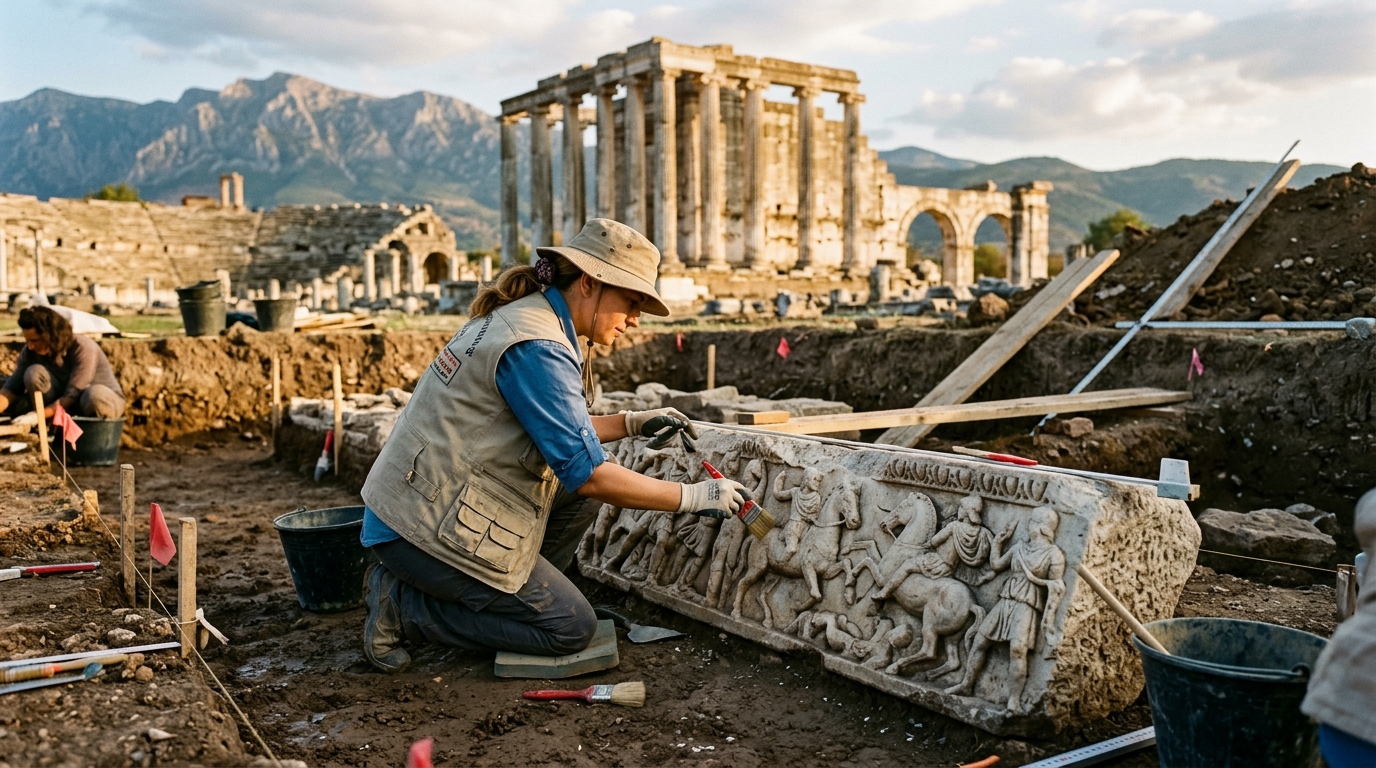
All monumental structures outside the security barriers of the excavation areas can be visited; You may even have the opportunity to watch the scientific work of archaeologists live.
Since there is little shade area, the hours between 08:30-10:30 in the morning and the afternoon before sunset are ideal for both protecting from the heat and capturing the golden light in photographs.
In accordance with law no. 2863, it must be delivered to the nearest museum or gendarmerie within 3 days at the latest. Bonuses are paid by law to citizens who deliver the work to the state.
It is located at an altitude of 1,700 meters in Burdur Ağlasun district. You can reach Antoninler Fountain in 10 minutes via the asphalt mountain road from the town center.