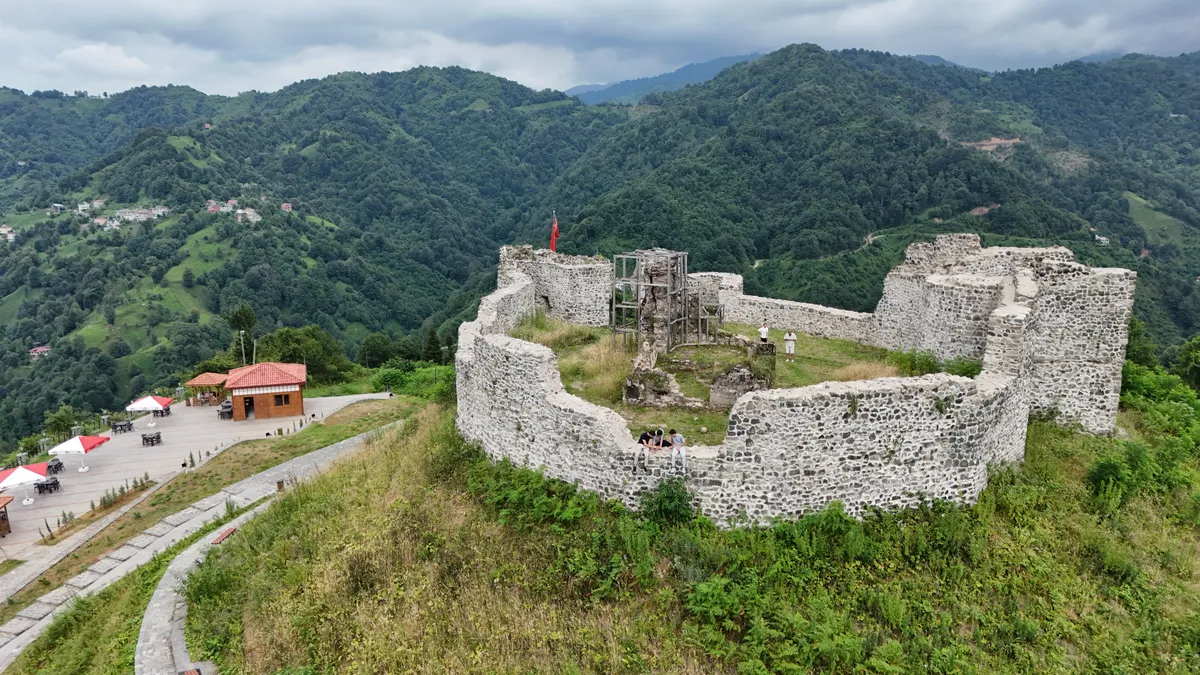

Arhavi, the charming town of Artvin, one of the unique corners of the Eastern Black Sea where green and blue embrace, attracts attention not only with its lush green valleys, flowing streams and historical bridges, but also with its mysterious underground world waiting to be discovered. Behind the magnificent natural beauties on the surface, Arhavi's mountainous and rugged geography has the potential to host caves and rock shelters that have been formed as a result of geological processes that have been going on for thousands of years. In this article, we will take a journey to these hidden treasures of Arhavi and discuss the cave potential and spirit of exploration of the region.
Arhavi Geography and Cave Formation Potential
Arhavi is a region with the typical mountainous structure of the Black Sea, split by deep valleys. Especially canyons and steep slopes shaped by streams such as Kamilet Valley reveal the power of erosion. The geological structure of the region includes volcanic rocks and metamorphic rocks, as well as occasional limestone formations. Limestone is the most suitable rock type for cave formation; It can easily dissolve by chemical corrosion of water, creating large gaps and galleries. Arhavi's high precipitation regime and strong streams can accelerate underground water flows in places where such geological formations are located, thus supporting cave formation processes.
Although they have not yet been fully mapped and opened to tourism, small-scale rock cavities and shelters known to local people or encountered by hunters and shepherds are the first signs of Arhavi's underground potential. Such formations can often be entrances or parts of larger and more complex cave systems. Although the difficult terrain and dense vegetation of the region make it difficult to discover these natural formations, they also make them more mysterious and attractive.
Hidden Shelters of Kamilet Valley
One of the most well-known natural beauties of Arhavi, Kamilet Valley
Historical and Cultural Importance of Arhavi Caves
Caves are important places that have been used for shelter, protection and even religious rituals throughout human history. Natural rock shelters in and around Arhavi can also shed light on the ancient history of the region. From prehistoric times, such natural shelters may have provided safe havens for hunter-gatherer societies. Considering the military activity and settlements in the region during the Roman and Byzantine periods, there can be traces of the caves being used as observation points or temporary shelters.
Even today, some local people use natural rock cavities to protect their animals or store agricultural products in harsh winter conditions. This shows that caves are more than just geological formations, they are a part of the cultural heritage and lifestyle of the region. Thanks to platforms focusing on local values such as Memleketim, it is of great importance to preserve such cultural and natural heritage and pass it on to future generations.
Reviving the Spirit of Discovery: Responsible Approach to Arhavi Caves
To realize the full potential of Arhavi's caves Its unearthing requires detailed geological research and speleological (caving) studies. Such discoveries will both contribute to scientific knowledge and increase the tourism diversity of the region. However, in this process, it is of great importance to preserve the natural balance and not to damage the cave ecosystems. Caves often host fragile ecosystems; They are critical habitat for bats, insects and other creatures. For this reason, exploration and tourism activities should be planned within the framework of sustainability principles.
For adventurers who want to explore the underground beauties of Arhavi, trips accompanied by local guides and taking the necessary safety precautions can offer unforgettable experiences. Although there is no large cave opened to tourism yet, small rock shelters and natural cavities in the region can offer surprises waiting to be discovered during nature walks. By introducing such discovery routes and local guide services, the Memleketim platform can help Arhavi's hidden beauties reach wider audiences. It is a niche tourism branch that is becoming popular. Arhavi's utilization of this potential can enrich the tourism portfolio of the district. In the future, caves that will be discovered and made safe as a result of detailed research may bring a new center of attraction to the region. This will not only contribute to the local economy, but also strengthen the overall tourism image of Artvin. The caves, which will be equipped with walking tracks, lighting systems and information panels, will offer visitors a visual feast and the opportunity to learn about geological formations.
Of course, the cooperation of local governments, non-governmental organizations and scientists is essential for the implementation of such projects. Developing sustainable tourism models while preserving Arhavi's natural and cultural heritage is critical for the future of the region. As My Homeland, we will continue to emphasize the unique potential of Arhavi and support the spirit of discovery.
Conclusion: Depths of Arhavi Waiting to be Discovered
Artvin's Arhavi district, in addition to its fascinating views on the surface, It also has underground riches waiting to be discovered. The caves and rock shelters, which have not yet been fully uncovered, contain important clues about the geological structure, historical and cultural texture of the region. When these mysterious depths are discovered with a responsible approach and scientific methods, they can bring a new tourism dimension to Arhavi. For nature lovers, adventurers and history buffs, Arhavi has the potential to be more than just a Black Sea town, but a destination that opens the doors to an underground world waiting to be discovered. Making use of this potential means preserving Arhavi's natural heritage and carrying it to the future.