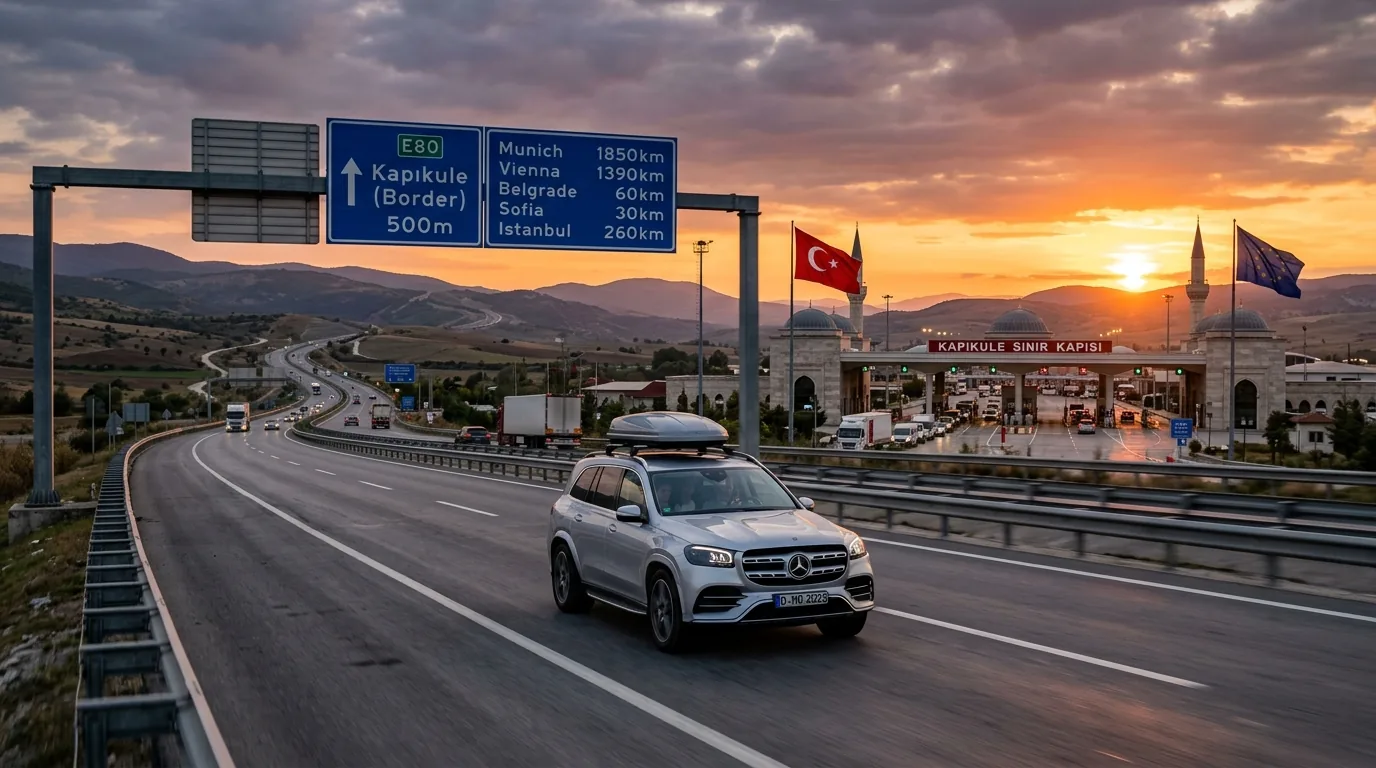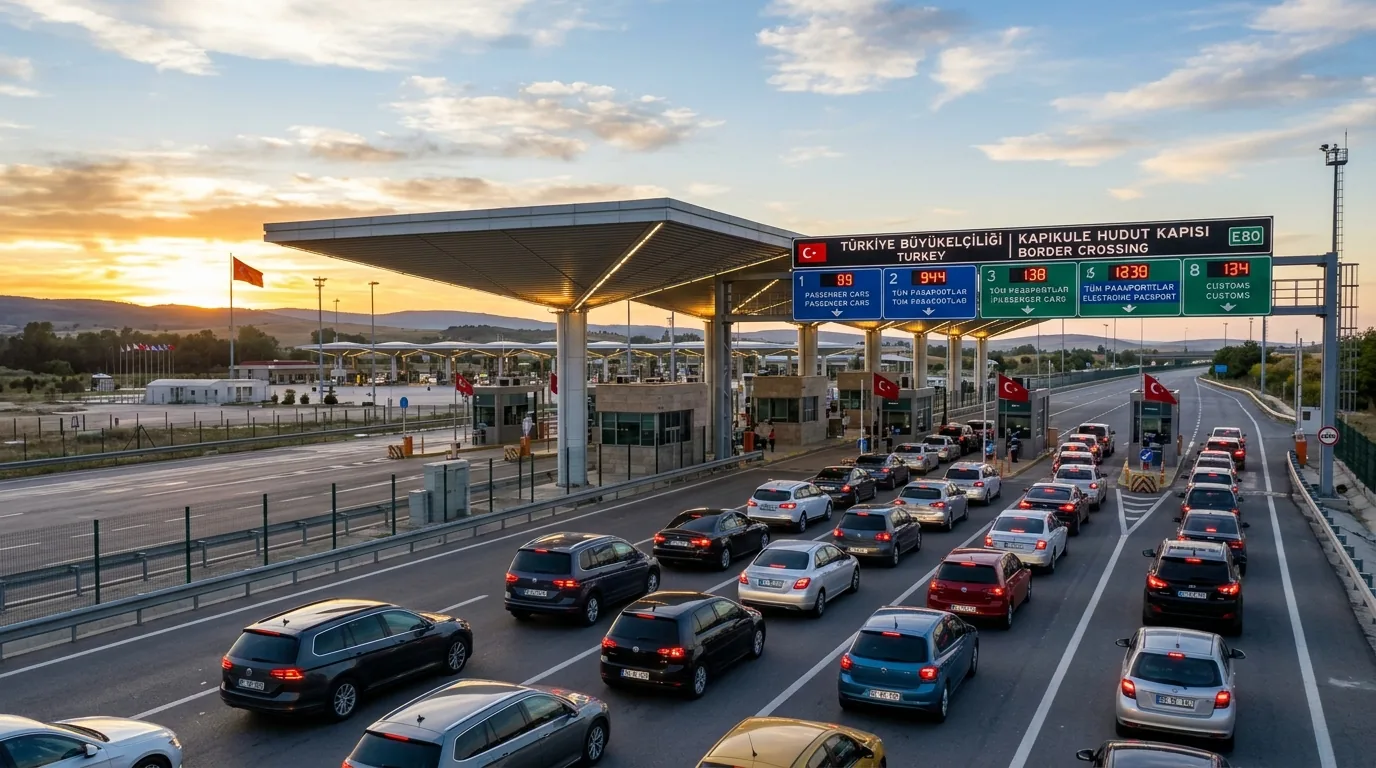

For motorists driving from Western and Central Europe to Turkey via the international overland route, prolonged border waiting times during peak summer months can turn an exciting journey into an exhausting 6 to 10-hour ordeal. Monitoring live border webcams, selecting the optimal border crossing, and completing digital pre-declarations in advance can slash your waiting time down to under 45 minutes.
In this authoritative 2026 guide, we analyze real-time live webcam feeds from the Trakya Regional Customs Directorate, evaluate four vital alternative border crossings (Hamzabeyli, Pazarkule, İpsala, Dereköy), and reveal tactical timing schedules to bypass congestion.
1. 2026 Turkey - European Border Crossings Comparison Matrix
The table below compares the 5 operational land border gates between Bulgaria, Greece, and Turkey:
| Border Gate | Neighbor Country / Opposite Gate | Inspection Lanes (Entry/Exit) | Peak Season Wait Times | Optimal Destination / Route |
|---|---|---|---|---|
| Kapıkule | Bulgaria (Kapitan Andreevo) | 12 Passenger / 2 Bus / Freight | 4 – 9 Hours (Weekends) | Direct O-3 / TEM Motorway access; Istanbul and Anatolian highway corridor |
| Hamzabeyli | Bulgaria (Lesovo) | 6 Passenger / 1 Bus / Freight | 1 – 3 Hours | Arriving via Elhovo - Yambol; Edirne northern bypass |
| Pazarkule | Greece (Kastanies) | 4 Passenger (Fully Modernized) | 30 Min – 1.5 Hours | 5 km from Edirne city center; Svilengrad-Ormenio bypass around Kapitan Andreevo |
| İpsala | Greece (Kipi) | 6 Passenger / 1 Bus / Freight | 45 Min – 2 Hours | Italy car ferries (Igoumenitsa), Thessaloniki Egnatia Odos; Çanakkale Bridge & Aegean |
| Dereköy | Bulgaria (Malko Tırnovo) | 2 Passenger (Light Vehicles Only) | 20 Min – 1 Hour | Black Sea coast (Burgas - Varna); Kırklareli route to northern Istanbul |
2. How to Track Live Webcams & Real-Time Queue Congestion
A) Official Trakya Customs Live Video Feeds
The Ministry of Trade provides 24/7 public streaming cameras on trakyagumruk.ticaret.gov.tr for Kapıkule, İpsala, Hamzabeyli, and Pazarkule. By inspecting these feeds 2-3 hours prior to arrival, drivers can evaluate:
- Actual vehicle queues before passport processing booths,
- Accumulation of vehicles in the neutral zone between Bulgarian and Turkish checkpoints,
- Operational speed of active inspection lanes.
B) Bulgarian Border Police (GDBP) Situation Bulletins
The Bulgarian Border Police publishes bi-hourly traffic bulletins specifying passenger and commercial vehicle delays at Kalotina (Serbian border), Kapitan Andreevo, and Lesovo checkpoints.
3. Tactical Bypass Routes When Kapıkule Is Congested
When Kapıkule queues stretch over 5 kilometers, diverting to Hamzabeyli (Lesovo) via Topolovgrad or taking the Pazarkule route via Greece can save you 4 to 6 hours of waiting time.
4. Fast-Track Customs Clearance via Digital Pre-Declaration
Foreign-registered vehicle owners can pre-submit car registration, passport, and Green Card insurance details using the official e-Devlet Foreign Vehicle Pre-Declaration online form. At the border checkpoint, customs officers instantly scan your pre-filled barcode, reducing vehicle entry processing from 4 minutes to under 30 seconds.
5. Frequently Asked Questions (FAQ)
Where can I watch Kapıkule live border cameras for free?
Live streams of vehicle queues entering and exiting Turkey are broadcast 24/7 free of charge on the official Ministry of Trade regional portal: trakyagumruk.ticaret.gov.tr.
Do I need a visa to bypass Kapıkule through Pazarkule via Greece?
Yes. Crossing from Bulgaria into Greece (Ormenio) and down to Pazarkule requires a valid multiple-entry Schengen visa, an EU residency permit, or a visa-exempt passport.
Is the e-Devlet vehicle pre-declaration mandatory?
It is not strictly mandatory, but it is strongly recommended because it expedites passport and vehicle documentation checks from several minutes to under 30 seconds per car.
When is the best time of day to cross the border smoothly?
The quietest transition windows are Tuesday, Wednesday, and Thursday mornings between 04:00 and 08:00. Avoid Friday evening through Sunday midnight during July and August.
Why is İpsala preferable for travel to southern Turkey?
İpsala connects directly to the 1915 Çanakkale Bridge, allowing drivers heading to Izmir, Bodrum, or Antalya to bypass all Istanbul metropolitan traffic completely.
What is the undeclared cash limit at European and Serbian borders?
Under EU and Serbian customs regulations, travelers may carry up to €10,000 in cash per adult without declaration. Any amount equal to or exceeding €10,000 must be declared in writing to customs.
2026 Strategic Field Guide: Route Planning, Highway Clearances, and Local Transit Logistics
Navigating cross-border highways, regional motorways, and transit hubs across Turkey and neighboring corridors in 2026 necessitates proactive logistical foresight. Peak seasonal influxes—notably summer holiday migrations and national celebration weekends—can generate extensive bottlenecks at electronic toll barriers, customs border gates, and major maritime ferry terminals. Actively monitoring live traffic feeds, ensuring electronic toll clearinghouse accounts (such as HGS or regional digital vignettes) possess sufficient pre-funded reserves, and charting secondary detour arteries significantly alleviates transit stress and curtails fuel consumption.
Furthermore, when traversing mountainous topography, national reserves, or remote canyon passages, mobile cellular reception may attenuate. Having full offline navigational cartography cached on your device, cataloging verified coordinates for emergency waypoints, and maintaining essential mechanical road supplies (such as a portable digital tire compressor and certified first-aid provisions) represents standard international best practice.
Official 2026 Traveler & Motorist Operational Checklist
- Toll Verification & Vignette Procurement: Acquire digital vignettes and HGS registrations exclusively via verified governmental clearing portals prior to traversing toll segments.
- Offline Navigation Caching: Pre-download all regional satellite tiles, accommodation markers, and emergency services onto local device memory.
- Mechanical Vehicle Inspection: Ensure comprehensive servicing of brake systems, tire tread depths, and coolant reservoirs prior to long-distance journeys.
- Currency Billing Precision: Always instruct merchant POS terminals to bill transactions in local fiat currency to prevent aggressive DCC (Dynamic Currency Conversion) markups.
- Emergency Support Services: Store relevant infrastructure hotlines including KGM Road Advisory (159) and Universal Emergency Response (112) in your mobile directory.
4 Critical Pitfalls to Avoid in 2026
Field data highlights four frequent operational mistakes made by international applicants and travelers, along with expert mitigation strategies:
| Risk Factor | Common Misconception | 2026 Verified Best Practice |
|---|---|---|
| Document Recency | Assuming certificates never expire | Ensure police checks and banking records are under 90 days old |
| Payment Trails | Transacting in unrecorded cash | Channel all fees through electronic banking with explicit reference IDs |
| Address Registration | Treating temporary rentals as permanent | Formally register your residential lease with municipal civil registries |
| Unauthorized Agents | Relying on unsolicited social media offers | Interact solely through official ministerial portals and accredited bodies |
2026 Budgeting, Currency Exchange, and Financial Scenarios
Navigating cross-border financial expenses and travel commitments in 2026 requires rigorous fiscal planning and disciplined currency management. Fluctuations in exchange rates, dynamic card processing surcharges, and merchant markups can inflate overall expenditures by 15% to 25% if unmonitored. Establishing a detailed ledger of all anticipated expenses—including administrative duties, consular tariffs, and local transit fees—ensures predictable capital allocation throughout your stay or application process.
For individuals pursuing extended residence, enterprise formation, or high-value medical procedures, securing authentic bank certification slips, foreign exchange purchase proofs (such as the Turkish DAB certificate), and corporate invoices is legally imperative. Utilizing multi-currency debit cards and routing transactions through zero-surcharge state financial institutions provides optimal cost efficiency and regulatory security.
2026 Regulatory Compliance, Cross-Border Protocols, and Passenger Rights
As of 2026, international transit frameworks, sovereign border control standards, and passenger protection directives have undergone stringent modernization. Collaborative oversight mechanisms operated by transportation ministries, civil aviation directorates, and customs border administrations mandate real-time electronic verification of biometric passports, digital vignette registries, and compulsory cross-border vehicular insurance policies.
With the integration of the European Union's Entry/Exit System (EES) and digital travel authorization schemes, international travelers must maintain meticulous document compliance. To ensure frictionless passage through land border checkpoints and major international transit hubs, passengers should confirm that comprehensive medical coverages meet statutory indemnity thresholds (minimum €30,000 within Schengen territories), vehicular Green Card insurance endorsements are certified, and minor authorization affidavits are notarized in advance.