Nestled along the sun-drenched southern slopes of the Aydın Mountains overlooking the fertile Maeander (Büyük Menderes) River Valley, Sultanhisar is home to one of the most distinguished intellectual, educational, and cultural capitals of the Greco-Roman world. Bisected by a dramatic gorge spanned by monumental bridges and vaulted substructures, Nysa ad Maeandrum captivates travelers with its urban ingenuity, magnificent hillside theater, and the famous ancient library where Strabo, the father of geography, received his education.
Beyond its classical antiquity, the district features Atça, famously dubbed "Turkey's Paris" for its unique radial street grid inspired by the Place Charles de Gaulle; the Malgaç Raid Martyrs Monument, commemorating the very first organized victory of Turkish civilian guerrillas during the War of Independence; the historic Yörük Ali Efe Museum in Kavaklı; and the celebrated, fragrant Sultanhisar strawberries that blanket the valley each spring.
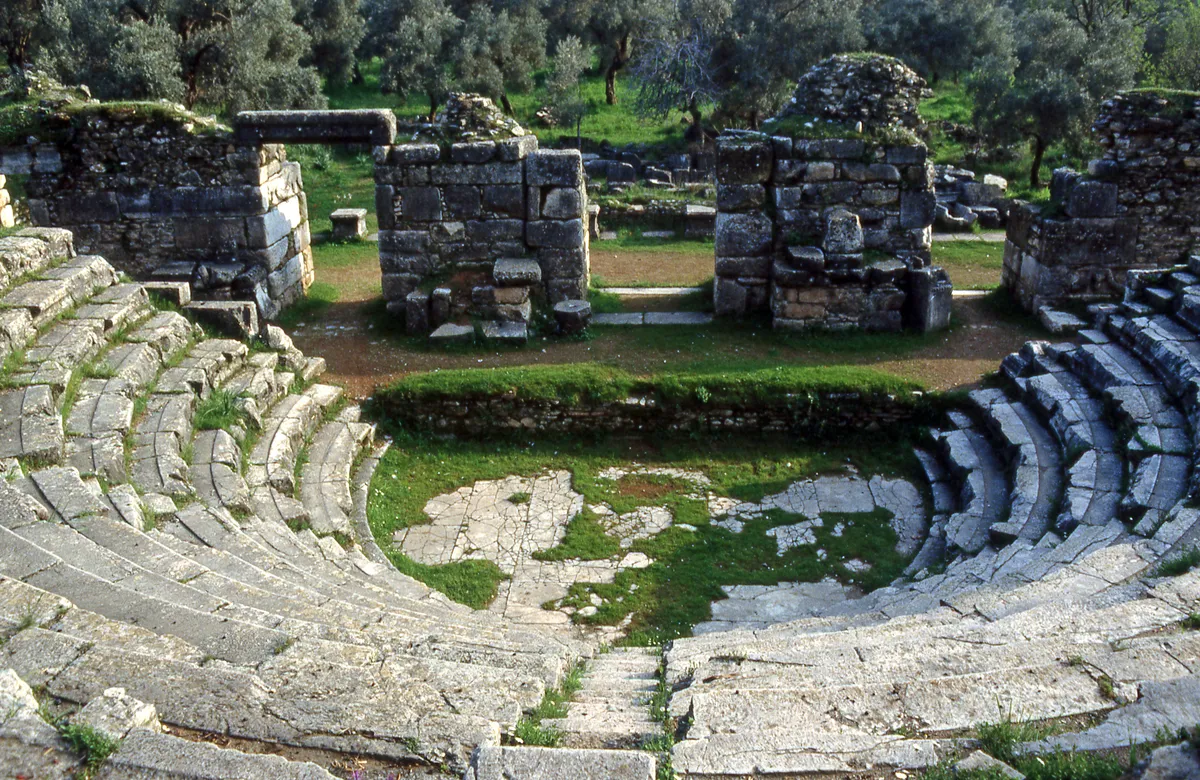
Situated 3 kilometers north of Sultanhisar amid silvery olive orchards, the ancient city of Nysa was founded in the 3rd century BC by Antiochus I Soter. The crowning jewel of the site is the Monumental Theater of Nysa, with a capacity of approximately 12,000 spectators carved into the natural slope of the gorge. Its horseshoe-shaped cavea and preserved stage building are decorated with celebrated marble friezes depicting the birth, upbringing, and mythological triumphs of Dionysus, the god of wine and theater.
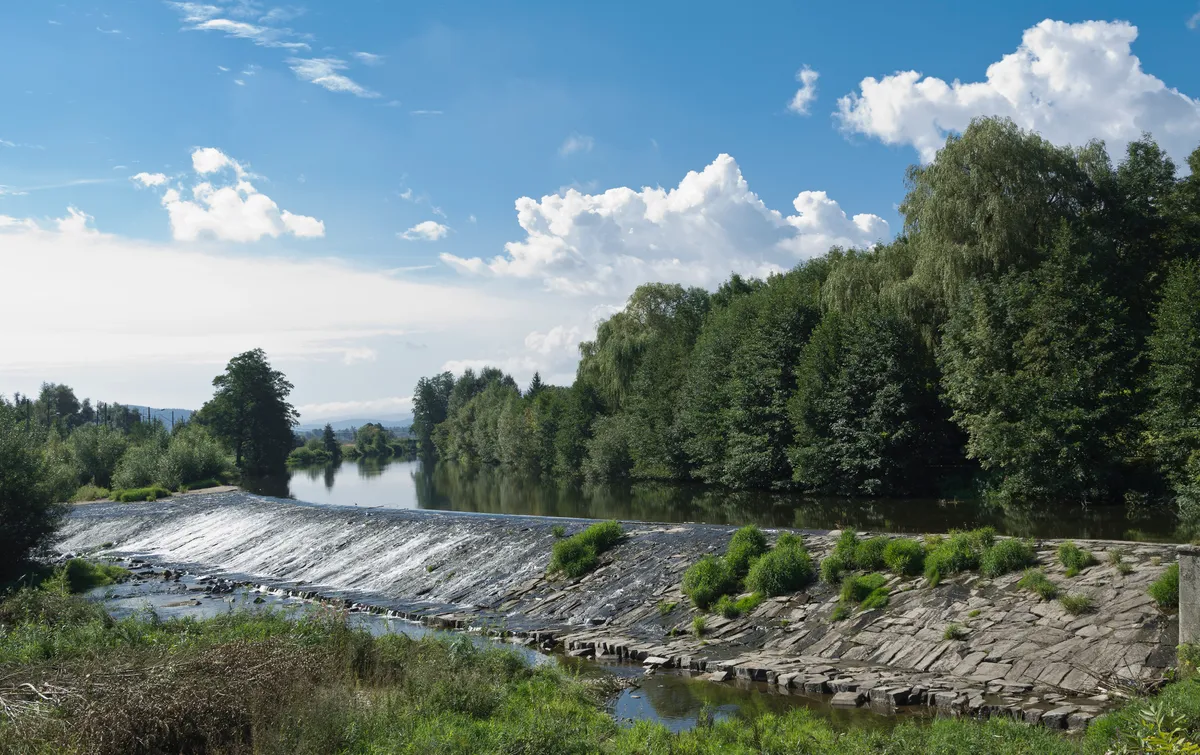
Nysa Theater & Archaeological Site Visitor Info
- Location: 3 km north of Sultanhisar center, Nysa Archaeological Park entrance
- Key Feature: Sculptured marble friezes depicting the mythological life of Dionysus
- Capacity & Style: 12,000 spectators, transitional Hellenistic-Roman civic architecture
- Visiting Hours: Open daily with Museum Pass (Summer: 08:30 - 19:30, Winter: 08:30 - 17:30)
Widely recognized as the best-preserved classical library in Anatolia after the Library of Celsus in Ephesus, the Nysa Ancient Library is a monumental two-story sanctuary of scholarship built in the early 2nd century AD. Engineered with sophisticated double-cavity walls to insulate valuable parchment scrolls and papyri against humidity, its reading rooms and wall niches remain astonishingly intact. The eminent geographer Strabo proudly recorded in his writings that he studied in Nysa during his youth, drawing from this very library. Adjacent to it stands the Bouleuterion (Council House / Odeon), a semicircular civic hall seating 700 delegates.
Nysa Library & Bouleuterion Fast Facts
- Historical Value: Second best-preserved ancient library in Anatolia; youthful study ground of Strabo
- Architecture: Two-story colonnaded façade with moisture-resistant double walls for scrolls
- Bouleuterion (Odeon): 700-seat covered council chamber and musical performance hall
- Best Photo Angle: Framing the monumental doorway arch with the council house steps in the background
The most striking engineering wonder that sets Nysa apart from other ancient sites is its Ancient Stadium and Vaulted Tunnel Bridge built directly over the torrent rushing through the central canyon. Roman engineers channeled the torrential mountain stream into a massive 100-meter-long cut-stone vaulted culvert, upon which they erected the seating tiers of a 30,000-seat stadium spanning both cliffs. This audacious civic integration of infrastructure and natural topography stands as a triumph of Roman engineering.
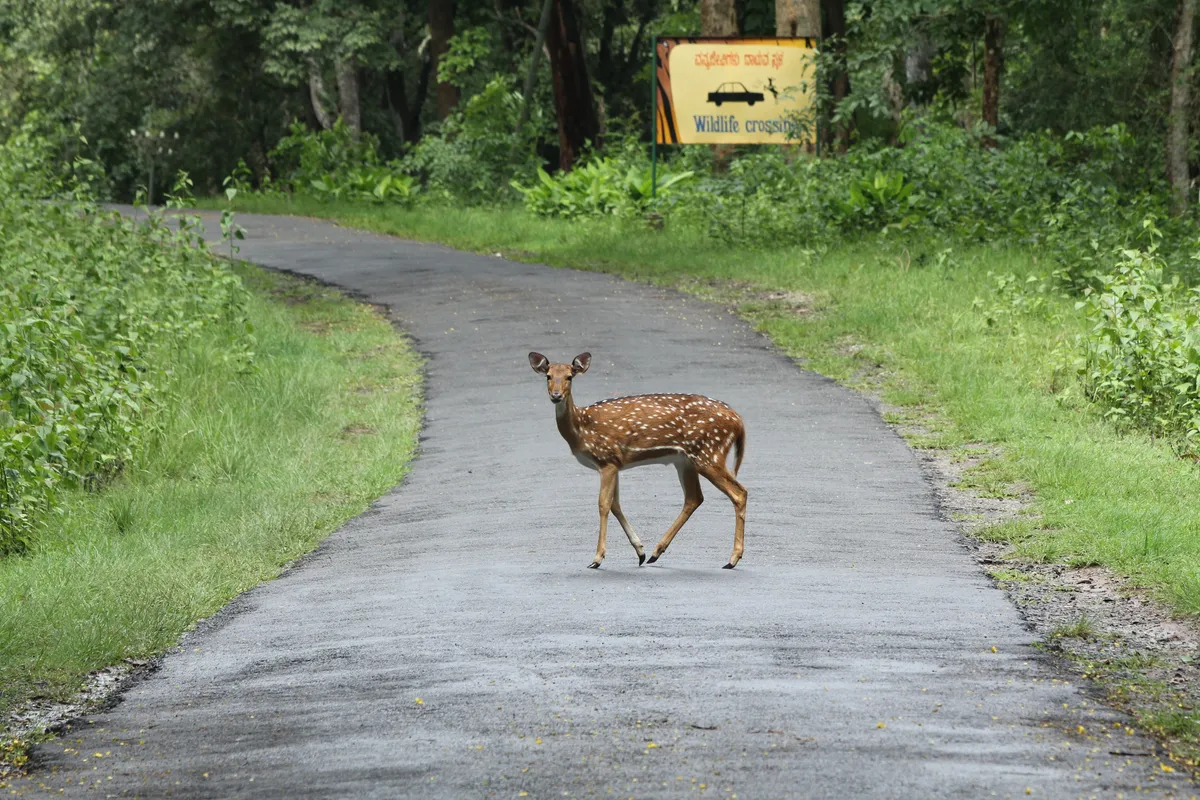
Engineering Profile: Stadium & Vaulted Bridge
- Structure Type: Vaulted flood-control culvert supporting double-sided stadium tiers
- Tunnel Dimensions: Approximately 100 meters long stone barrel vault beneath the arena
- Civil Engineering: Multiple stone bridges connecting the eastern and western halves of the city
- Visual Impact: Harmonious blending of the rugged natural ravine with monumental Roman stone arches
Occupying the southern terrace of the city, the Ancient Agora of Nysa served as the bustling commercial, legal, and social hub of the city. Enclosed on all four sides by double-rowed stoas with Ionic and Corinthian capitals, the agora bustled with merchants trading olive oil, wine, grains, and luxury crafts. Leading toward the city gates, the Colonnaded Street retains massive marble paving slabs, fluted column shafts, and intricate underground drainage channels, offering an evocative glimpse into urban Roman splendor.
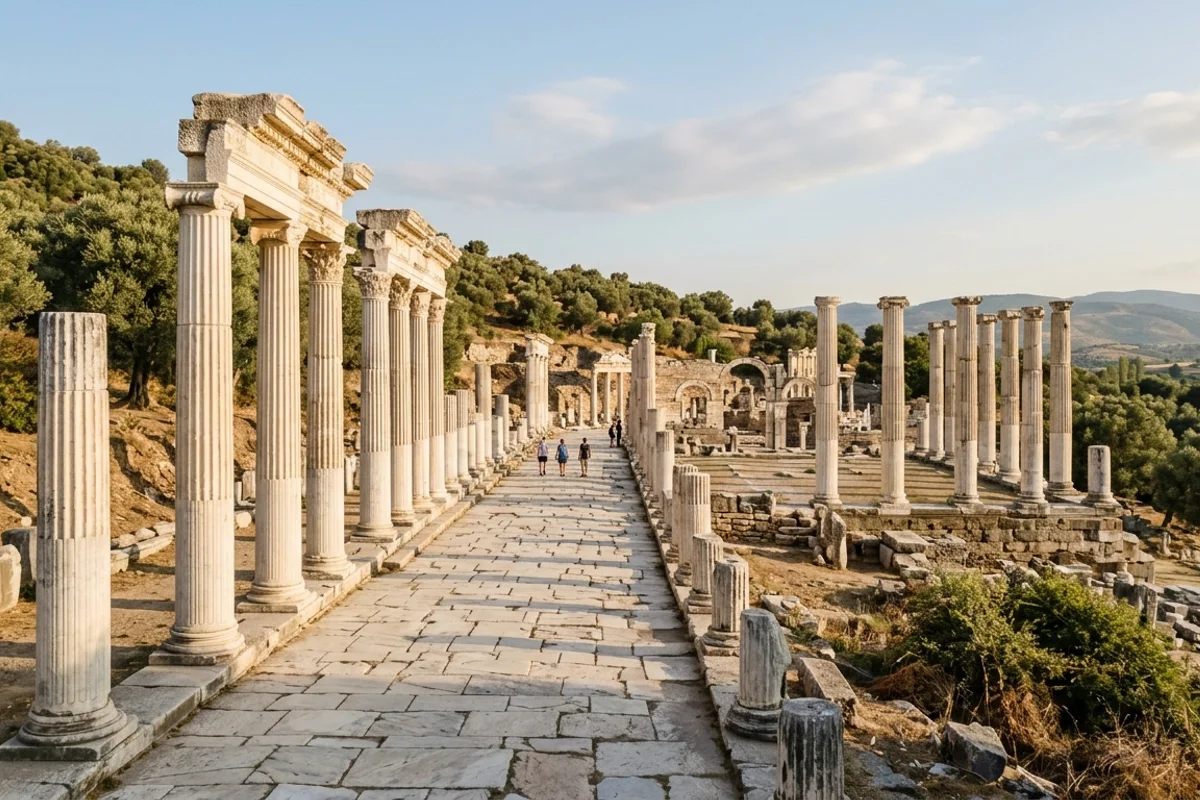
Agora & Commercial Life Highlights
- Plan & Layout: Rectangular monumental marketplace enclosed by four colonnaded stoas
- Architectural Style: Ionic and Corinthian porticoes fronting marble shopfronts
- Sanitation: Sophisticated Roman underground drainage and rainwater management system
- Photography: Morning sunlight casting long rhythmic column shadows across the marble pavement
One of the most consequential turning points in the Turkish War of Independence, the Malgaç Raid was launched on the night of June 16, 1919, by commander Yörük Ali Efe and his partisan detachment against the occupying Greek outpost guarding the railway bridge. This daring assault was the first organized and planned civilian offensive victory against the occupying forces in Western Anatolia. Standing prominently at the entrance of Sultanhisar, the Malgaç Raid Martyrs Monument honors these brave freedom fighters with a bronze statue, marble inscriptions, and memorial gardens.
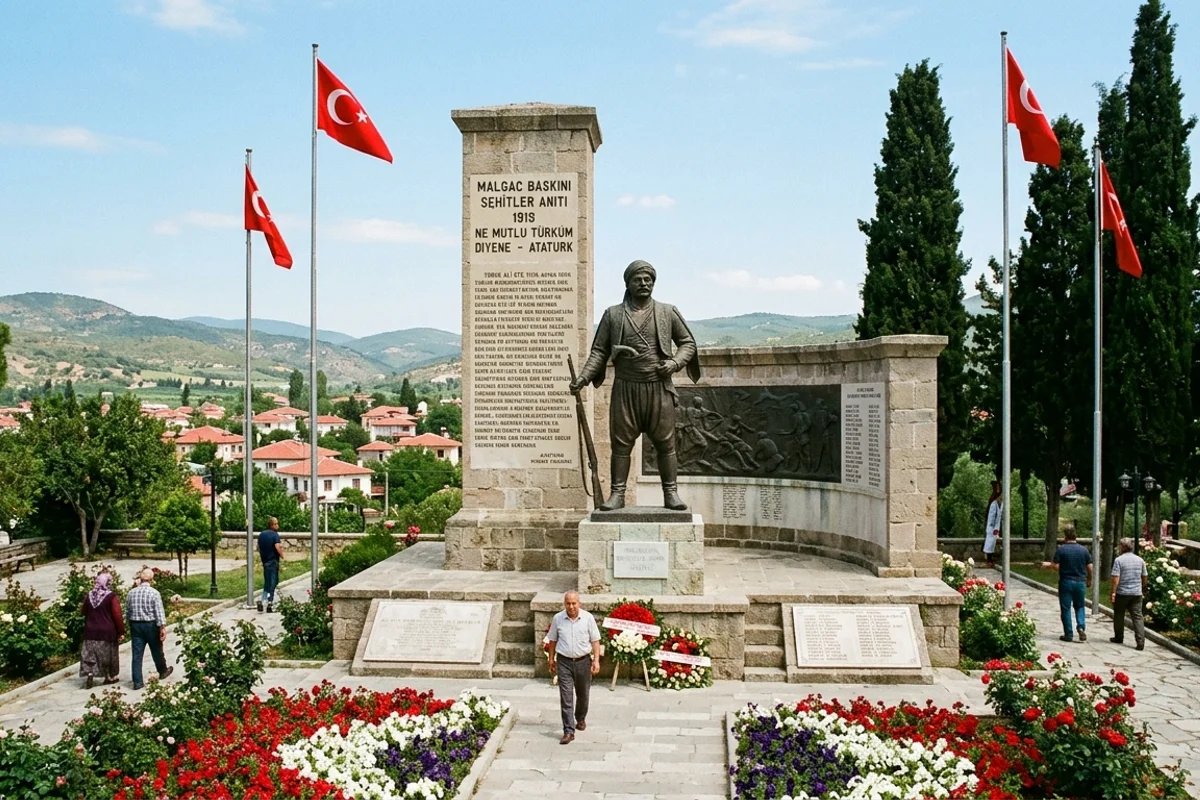
Malgaç Raid & Memorial Overview
- Date of Event: June 16, 1919 (First organized offensive victory of Turkish civilian partisans)
- Guerrilla Leader: Legendary Aegean national hero Yörük Ali Efe and his mounted detachment
- Strategic Consequence: Severed invading troop logistics on the Aydın-Nazilli line and ignited regional morale
- Location: Entrance to Sultanhisar along the Aydın-Denizli highway in a dedicated memorial park
The authentic two-story mansion in Kavaklı Village where national hero Yörük Ali Efe spent his final years has been faithfully restored and converted into the Yörük Ali Efe Museum. Featuring traditional whitewashed stone walls, timber oriel windows, and a cobblestone courtyard, the mansion houses Yörük Ali Efe’s original embroidered Aegean jackets, yataghan swords, rifles, pistols, Medal of Independence, and historic wartime correspondence. In the quiet garden lies the efe’s memorial tomb, drawing visitors seeking inspiration and patriotic reverence.
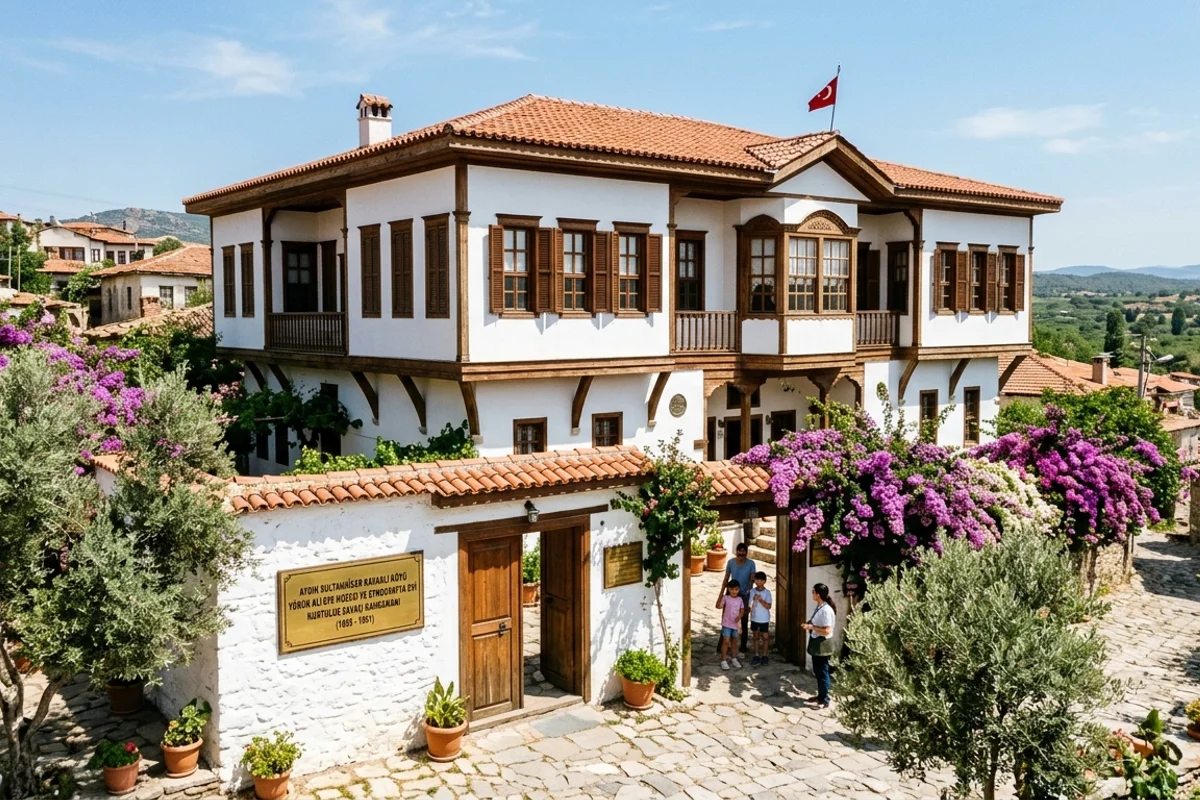
Yörük Ali Efe Museum Visitor Guide
- Location: Kavaklı Village, Sultanhisar (3 km from district center)
- Collection: Original silver-embroidered vests, weaponry, medals, personal effects, and photographs
- Spiritual Highlight: The marble tomb and burial site of Yörük Ali Efe in the mansion garden
- Admission: Free admission Tuesday through Sunday during standard museum operating hours
Following its destruction during the War of Independence, the town of Atça was reimagined by engineer Abdi Bey, who had studied modern urban planning in France. Modeling his blueprint on Paris’s famous Place Charles de Gaulle (Étoile), he constructed a central circular park with 8 grand avenues radiating outwards like the spokes of a wheel, interconnected by concentric crescent streets. From above, Atça resembles a giant compass, rightfully earning its renown as "Turkey's Paris" and standing as the nation's only radial circular town plan.
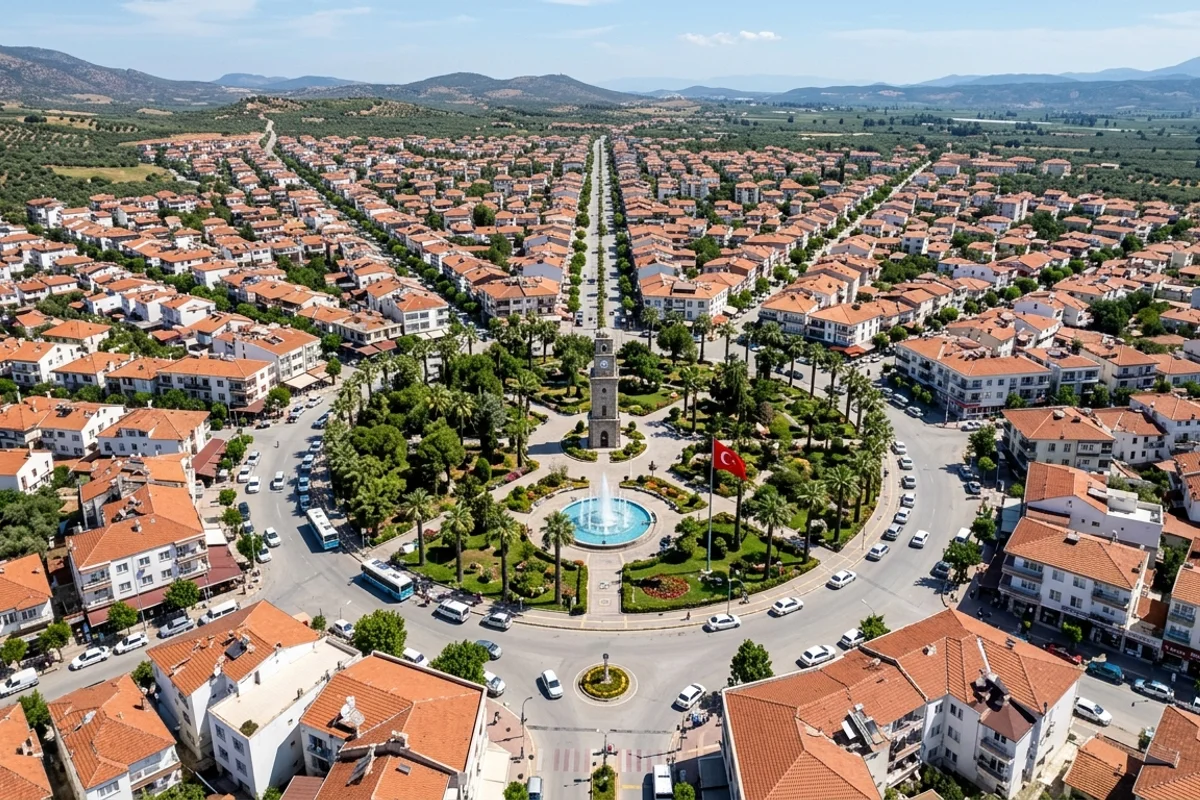
Atça Town Plan & Urban Characteristics
- Inspiration: Paris Place Charles de Gaulle radial boulevard and circular grid design
- Reconstruction: Designed between 1924 and 1926 by town planner Abdi Bey
- Central Square: Clock tower, fountain pools, palm trees, and shaded circular promenades
- Uniqueness: The only town in Turkey built entirely on a radial circular street grid
Built in the 1880s along the Izmir-Aydin-Denizli railway line by the British Ottoman Railway Company (ORC), the Historical Atça Railway Station is a poetic testament to 19th-century transport architecture. With its stone-dressed façade, carved timber platform awnings, and station bell, this active stop remains a romantic gathering spot. Shaded by monumental plane trees, the station tea garden allows travelers to sip freshly brewed Turkish tea while vintage regional trains rumble past.
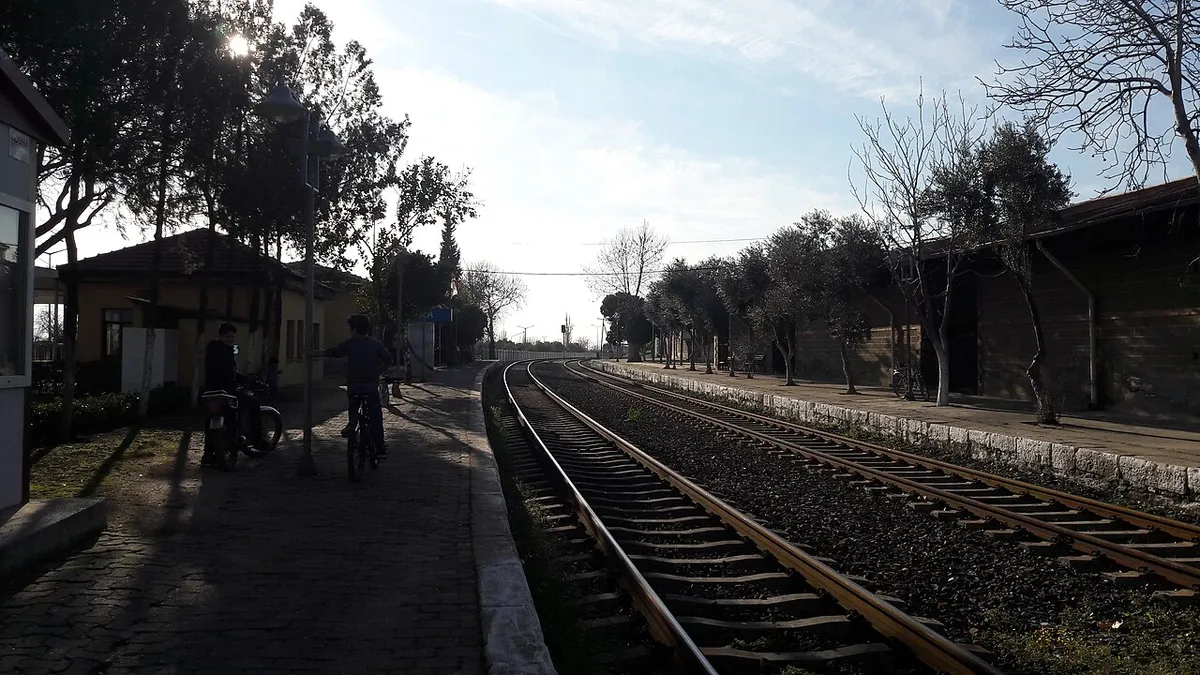
Atça Railway Station Highlights
- Construction Era: Late 19th century by the British Ottoman Railway Company (ORC)
- Architectural Style: Victorian stone masonry, decorative timber eaves, and nostalgic platform bells
- Rail Services: Daily regional trains operating between Izmir Basmane, Aydın, and Denizli stop here
- Atmosphere: Peaceful platform tea gardens under the shade of ancient plane trees
The bustling heart of civic life in Sultanhisar, the Town Square is crowned by the Ottoman-era cut-stone minaret of the Bazaar Mosque (Çarşı Camii) and towering historic plane trees. Sultanhisar is universally celebrated as the strawberry capital of Turkey. Especially from March to June, the square overflows with crates of freshly picked, crimson, intensely sweet strawberries. The intoxicating scent of fresh fruit fills the surrounding coffeehouses and artisan shops, creating an authentic Aegean small-town experience.
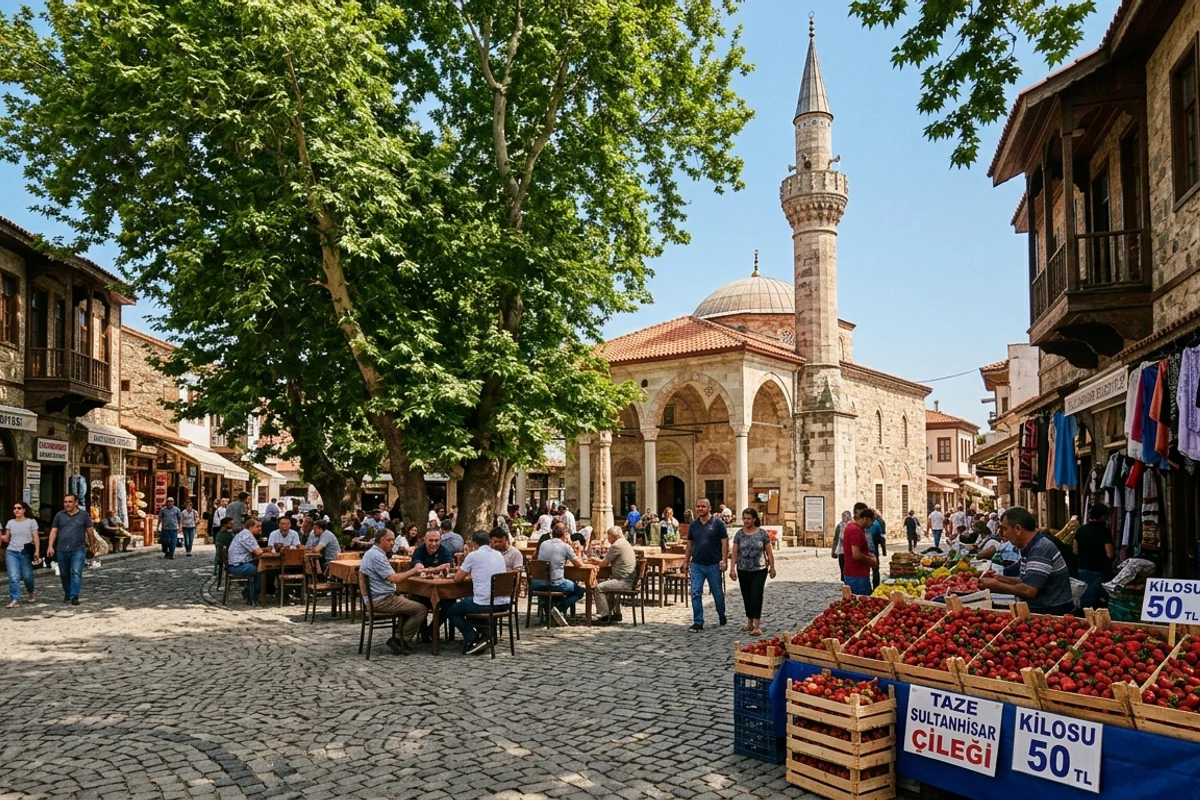
Sultanhisar Strawberries & Market Info
- Agricultural Fame: Turkey’s premier strawberry producer; renowned for aroma, sweetness, and firmness
- Historical Monument: Ottoman-era Çarşı Camii featuring traditional stone masonry and courtyard
- Best Time to Visit: May, during the International Sultanhisar-Atça Strawberry and Culture Festival
- Local Shopping: Freshly harvested strawberries, homemade strawberry jam, sun-dried figs, and cold-pressed olive oil
Perched on the cool highland slopes of the Aydın Mountains, Eskihisar Village is Sultanhisar’s most serene natural sanctuary. Along a babbling mountain brook stand Historic Watermills with wooden water wheels, surrounded by terraced olive groves, fruit orchards, and strawberry plots. The soothing sound of mountain waters cascading beneath rustic wooden footbridges makes this valley an ideal retreat for hiking, enjoying a hearty village breakfast, and unwinding after exploring the classical ruins of Nysa.
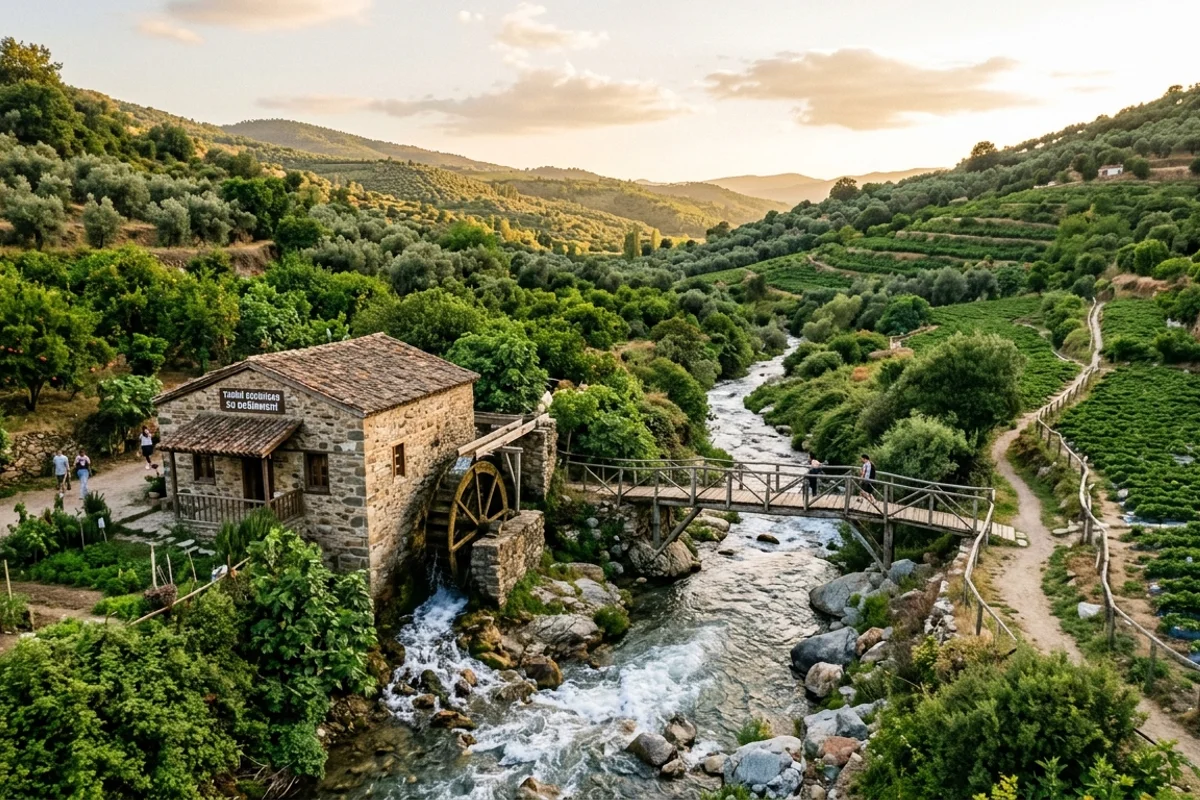
Eskihisar Mill Valley Highlights
- Location: Eskihisar Village valley (5 km from Sultanhisar district center)
- Natural Scenery: Streamside plane trees, mountain water cascades, and hillside strawberry fields
- Heritage: Traditional stone watermill with timber water wheel mechanism
- Activities: Nature walks, organic village breakfast by the stream, photography, and tranquil relaxation
Suggested Itineraries for Sultanhisar & Atça (1-Day and 2-Day Plans)
| Time Slot | 1-Day Express Tour | 2-Day Comprehensive Discovery |
|---|---|---|
| Morning (09:00 - 12:30) | Nysa Ancient City: Theater, Library, and Stadium Bridge | Day 1: Comprehensive exploration of Nysa Ancient City and Agora |
| Lunch (12:30 - 14:00) | Local Aegean dining and fresh strawberry tasting in Sultanhisar center | Traditional village lunch at Eskihisar Mill Valley |
| Afternoon (14:00 - 17:30) | Malgaç Monument, Yörük Ali Efe Museum, and Atça circular square | Day 1: Malgaç Monument and Kavaklı Yörük Ali Efe Museum |
| Day 2 (Full Day) | - | Atça radial city tour, Historic Train Station, strawberry farms, and hiking in Eskihisar |
Frequently Asked Questions About Sultanhisar & Nysa (FAQ)
How do I reach Sultanhisar and Nysa Ancient City?
Sultanhisar is conveniently situated on the primary Izmir-Aydın-Denizli highway and railway trunk line, 30 km east of Aydın and 15 km west of Nazilli. Frequent public minibuses run every 15 minutes from both cities. Regional passenger trains stop directly at Sultanhisar and Atça stations. Nysa is located 3 km north of the center, accessible in 5 minutes by car or taxi.
What makes the Ancient Library of Nysa so unique?
The Nysa Library is the second best-preserved ancient library in all of Anatolia after the Library of Celsus in Ephesus. Its two-story reading rooms feature double-cavity stone walls built specifically to preserve delicate manuscripts from humidity and book pests. Moreover, the celebrated ancient geographer Strabo studied here.
Why is Atça called "Turkey’s Paris"?
Reconstructed following its destruction during the War of Independence, Atça was designed by architect Abdi Bey, who had studied in France. He directly adapted Paris's famous Place Charles de Gaulle layout, creating a central circular park with 8 radiating main avenues linked by concentric crescent streets—a design found nowhere else in Turkey.
Is the Turkish Museum Pass (Müzekart) accepted at Nysa?
Yes, the Nysa Archaeological Site is officially managed by the Ministry of Culture and Tourism, and the Turkish Museum Pass (Müzekart) is valid year-round for complimentary entry.
What was the significance of the Malgaç Raid?
Carried out on June 16, 1919, under the leadership of Yörük Ali Efe, the Malgaç Raid was the first planned and decisive offensive victory by civilian resistance fighters (Kuva-yi Milliye) against invading forces in Western Anatolia, turning the tide of popular morale.
When is the best season to taste Sultanhisar strawberries?
Sultanhisar strawberries reach peak harvest, flavor, and sweetness between April and June. Visiting in early May during the annual International Strawberry and Culture Festival provides the ideal opportunity to taste them fresh from the fields.
From the scholarly silence of Strabo’s library in Nysa to the radial avenues of Atça, and from the patriotic pride of the Malgaç Memorial to the sweet strawberry groves of Eskihisar, Sultanhisar is a sublime fusion of classical learning and Aegean agrarian beauty. Explore our companion travel guides to plan your ultimate Turkish itinerary.