# Atlas of Turkey's 973 District Women's Labor and Village Cooperatives: Rural Development, Ancient Crafts and Solidarity Economy Guide
!Turkey's Atlas of Women's Labor and Village Cooperatives
The true guardians of Anatolia's thousands of years of production memory, seed saving tradition and culinary wisdom have always been women. Women, who shoulder the entire burden of rural life, from planting in the field to harvesting, from warping on the loom to preparing the winter pantry, have been rendered invisible in the economic system as "unpaid family workers" for many years.
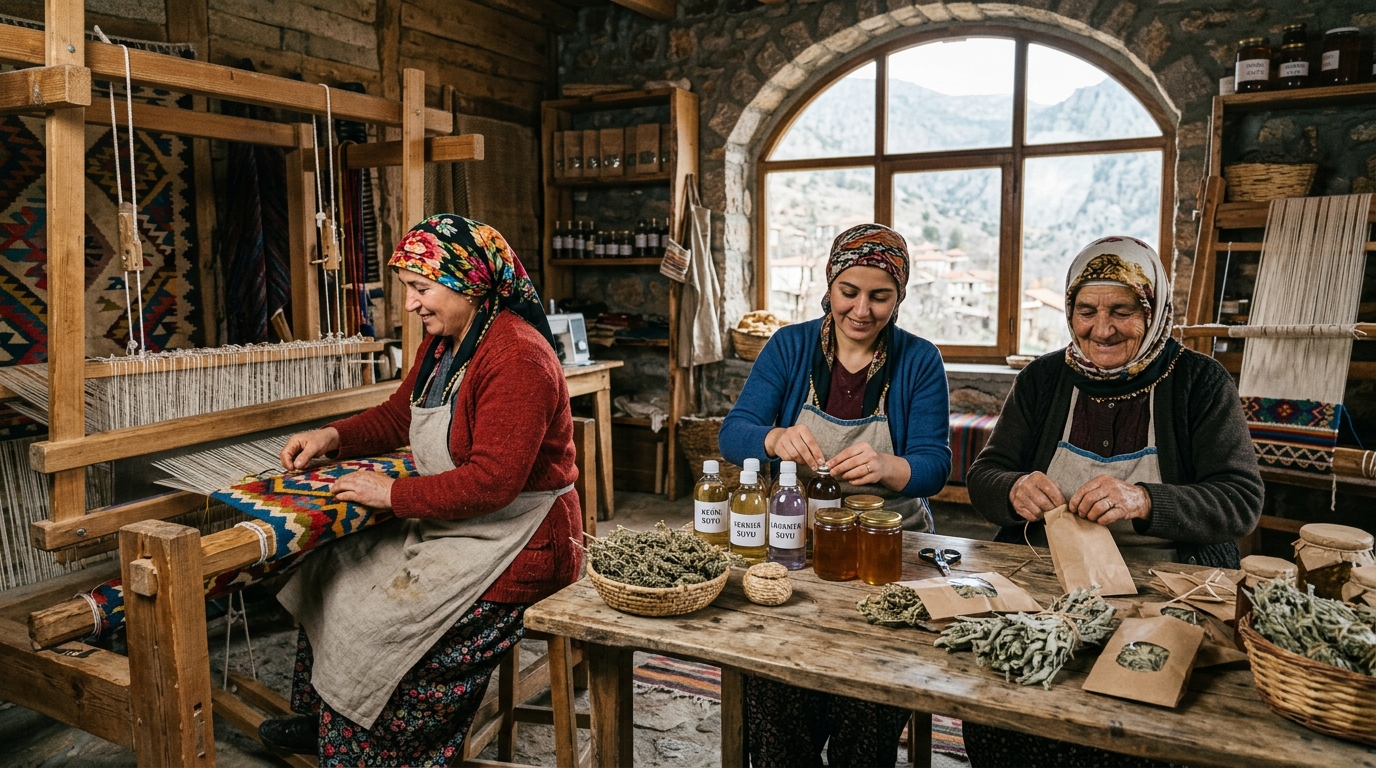
However, Women's Cooperatives and Village Development Unions, which have sprouted all over Türkiye in recent years and spread to 973 districts today, have broken this cycle from its roots. An Anatolian woman who cuts noodles for her family at home, boils tomato paste, collects thyme from the mountains, or weaves rugs on wooden looms; By uniting under the roof of the cooperative, they both gained their economic independence and turned into entrepreneurs who changed the fate of their village and district.
However, due to the limited marketing opportunities, exorbitant commissions demanded by large e-commerce monopolies and logistical difficulties, these unique products, produced with great effort, have difficulty reaching the consumer base they deserve. My Memleketim is the most powerful civil servant of fair trade by establishing the "Atlas of 973 District Women's Labor and Village Cooperatives", which gathers all registered women's cooperatives, village workers and craftsmen in 81 provinces of Turkey on a single interactive map. has built its network.
1. The Role of Women's Cooperatives in Rural Transformation
Women's cooperatives are not ordinary commercial enterprises; It is the guarantee of rural development, gender equality and cultural heritage:
Women directly own the value they produce, contribute independently to household income and secure the education of their children.
Century-old local seeds stored in chests come to life again in cooperative gardens, breaking the dependence on hybrid seeds.
Silk weaving, ehram, madder rugs and basket weaving, which are about to disappear, are passed on to younger generations.
The young population, seeing opportunities for production and earning, stays in their villages instead of being stuck in the minimum-wage industrial wheels of metropolitan cities.
2. Prominent Women's Cooperative Schools from 81 Provinces and Districts
Türkiye's geographical richness is also reflected in the areas of expertise of women's cooperatives:
Aegean and Mediterranean: Olives, Medicinal Plants and Fruit Drying
- Isparta Kuyucak & Keçiborlu: Women who open lavender fields to tourism and organic cosmetics; It has brought prosperity to the entire village with lavender oil, lavender honey and natural soaps.
- Aydın & Muğla Cooperatives: Specializes in pine honey, early harvest cold-pressed olive oil, dried fig and citrus peel jams.
- Antalya Gazipaşa & Alanya: It is a pioneer in dried tropical fruits (avocado, dragon fruit, banana) and carob (carob) molasses.
Southeastern and Eastern Anatolia: Spices, Legumes and Ancient Weavings
- Gaziantep & Kilis Women's Cooperatives: Sun-dried stuffed eggplant, pepper, pomegranate syrup, zahter and hand-forged copper craftsmanship are kept alive.
- Hatay Defne and Samandağ: Women's unions that revive centuries-old sericulture and cook genuine laurel soap on wood fire.
- Bayburt & Erzurum: Masters who transform the traditional "Ehram" weaving, which is made from sheep's wool and keeps it cool in summer and warm in winter, into modern scarves and bags.
Black Sea: Wood, Hemp and Corn Flour Collaboration
- Rize Feretiko (Rize Cloth): Cooperatives that introduce the world to the centuries-old Rize cloth, which is woven from hemp yarn on hand looms and absorbs sweat.
- Kastamonu & Sinop: Women who make einkorn flour noodles, Taşköprü garlic pickle, chestnut honey and cranberry tarhana.
Central Anatolia: Heirloom Wheat and Carpet Heritage of the Steppe
- Kayseri & Sivas: Fenugreek, pastrami spices, homemade ravioli and hand-spun madder dyed wool carpets.
- Ankara Nallıhan: Women's cooperative workshops that transform silk needle lace into works of art.
3. The Ethical Importance of Shopping from Women's Cooperatives
There is a huge difference between buying industrially packaged products from a supermarket chain and ordering from a village women's cooperative:
- Support to the Family, Not the Capital Monopoly: Every 100 TL you spend is not going to the coffers of a multinational food conglomerate; It goes to the education fund of a mother who sends her child to university in the village.
- Clean Food Without Chemical Preservatives: Women's cooperatives do not engage in fabricated mass production. They produce it using traditional methods, without additives, without preservatives, just like they will feed it to their grandchildren.
- Sustaining the Rural Heritage: Economic empowerment of women prevents village schools from remaining open and ancient culinary recipes from disappearing.
The official Women's Enterprise Production and Business Cooperative phrase and business registration number are clearly displayed on the product label.
The list of ingredients does not contain foreign chemical preservatives (E211, E202 etc.); only natural salt, vinegar, olive oil or lemon juice.
You can directly message the cooperative presidents and members on the platform and visit the workshop in the village in person.
4. What Can You Do With My Homeland Women's Labor Atlas?
My hometown provides unique opportunities to citizens who want to support local development:
- District Based Cooperative Search: You can see which women's cooperatives have sales stores or workshops in your district or on the route you travel with one click.
- Order Without Commission: You can buy natural products directly from cooperatives without paying any intermediary fee through the Civil Supply Chain from Field and Workshop to Table.
- Discovering Geographically Indicated Products: You can confirm the registered local delicacies it produces with 1.600+ Atlas of Geographical Indications.
- Market and Harvest Calendar: You can follow live on the Neighborhood and Producer Markets Calendar on which weeks the fresh products appear on the stalls.
- Cooperative Discounts and Opportunities: You can catch cooperatives' special day and bulk order discounts with Opportunities Radar.
5. Frequently Asked Questions (FAQ)
They are officially registered non-governmental organizations where at least 90% of their partners are women, women are involved in the decision-making mechanism and transform rural women's labor into economic power.
Products are packaged directly in the production center in the village under hygienic conditions and delivered to the cargo within 48 hours in air cushion or styrofoam boxes.
Yes. Cooperatives can issue corporate invoices; Provides specially packaged bulk supplies for holiday gifts, personnel food packages or social responsibility projects.
By filling out the 'Cooperative Registration' form on our platform, they can open a verified profile and display their products on the map without paying any fee.
It's absolutely normal. Since fresh fruit's own sugar and the natural nature of wood fire are used instead of fabricated chemicals, each harvest season has its own unique flavor.