# Guide to Turkey's Centuries-Old Tradesman Restaurants and Living Taste Craftsmen: Pot Dishes, Akhism Ethics and Ancient Cuisine Map
!Turkey's Centennial Artisan Restaurants and Taste Craftsmen
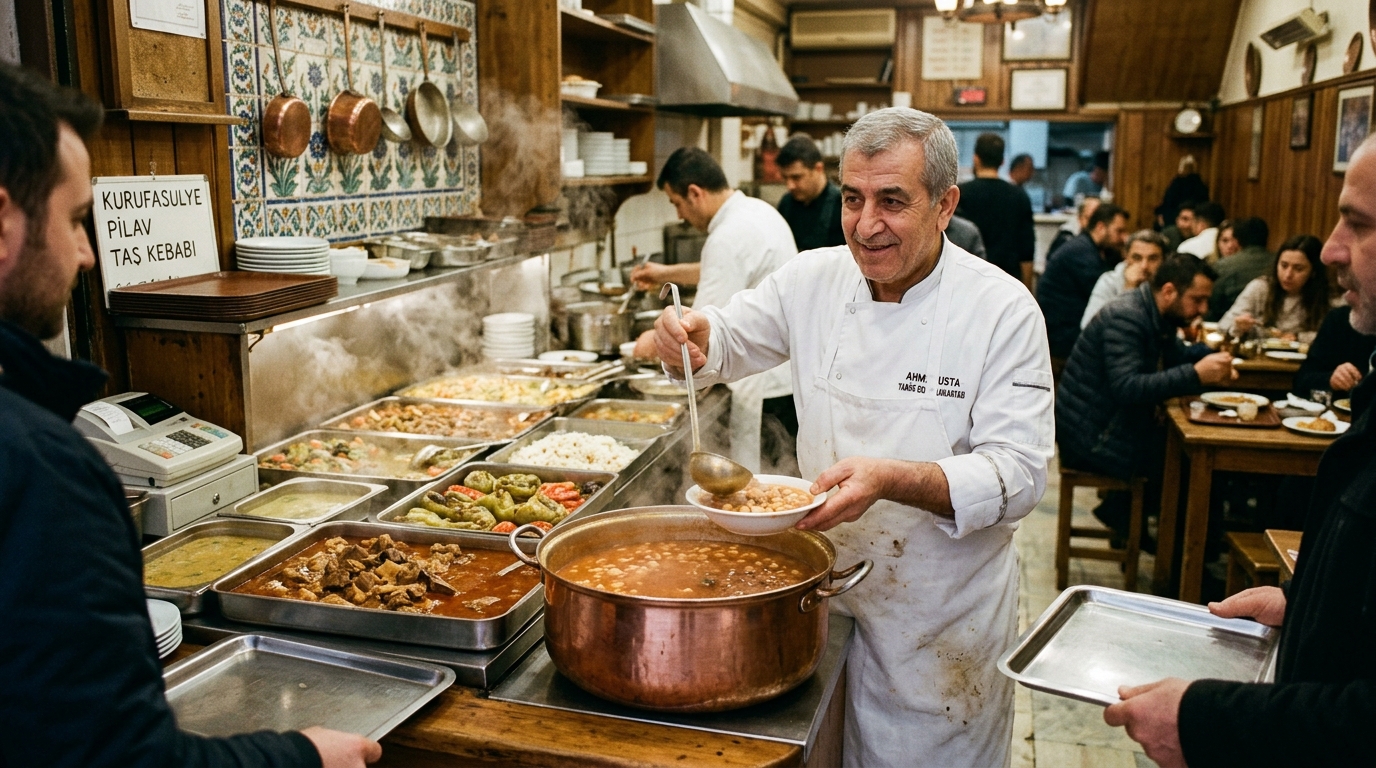
The heart of Turkish cuisine; It does not take place in luxurious Michelin-starred halls or molecular gastronomy laboratories, but in historical tradesmen's restaurantswith their shutters opening at dawn, steam rising from huge copper pots, and centuries-old marble counters. Tradesmen's restaurant; It is a civil gastronomy institution, unique in the world, that blends the delicacy of Ottoman palace cuisine and the sincerity of Anatolian home cooking with the Ahi morality.
Food here is not an object of consumption, but a form of respect and craft. The marrowed calf shin bones placed on the stove at 05:00 in the morning turn into healing water by boiling over low heat for hours; Çayeli's dried beans are brewed with churned butter in a copper cauldron, and Manisa's shevketi orchard cooked with lamb is lined up in the display case. The customer approaching the counter does not ask for a menu; He points his finger at the fried stone kebab, lamb head, eggplant moussaka or artichoke with olive oil behind the glass. The master's call to the apprentice saying *"He liked a little soup, half dry, and a portion of sultan"* is the chorus of a centuries-old symphony.
However, today, when industrial ready-made sauces, frozen foods, fast-food chains and speed madness surround everything; These ancient restaurants are disappearing one by one under the threat of urban transformation and inability to find apprentices. My Memleketim, by recording registered artisan restaurants in 81 provinces of Türkiye that are half a century old and more than a century old, living taste masters and their almost forgotten pot recipes, "Türkiye's Centennial Esnaf Restaurants" He presented his Atlas"to the service of gastronomy lovers.
1. What Makes Esnaf Restaurant Different? Akhism Ethics and Pot Culture
The difference between a classical restaurant and a historical tradesman restaurant is not only in taste but also in culinary philosophy:
Foods are not battered in pressure cookers; It is brewed slowly in tin-plated copper pots, stone ovens or a steam boiler.
Meals are cooked in the morning and are sold out between 12:00-14:00; At 16:00 there is not a single plate left on the counter. Never use microwaves or heating.
Margarine and bouillon cannot enter the kitchen. Genuine bone broth, highland butter and registered geographically indicated products are used.
The apprentice in the industry and the holding boss sit side by side at the same table; No one is privileged, portions are filled with abundance.
2. Centuries-Old Culinary Legends Living City by City
These restaurants, operating in Turkey's historical trade centers, arastas and inns areas, are the living memory stops of the city:
Istanbul: Historical Peninsula and Beyoğlu Line
- Eminönü & Sirkeci: Historical Subaşı Lokantası (1960s), Pandeli (1901 - Spice Bazaar entrance), Konyalı Lokantası (1897); It carries the imperial cuisine to the present day with its palace-style lamb shank, hünkar betti and sour cherry tirits.
- Fatih & Kadıköy: Centuries-old soup makers in Fatih and Ioannina Food masters in Kadıköy Bazaar; It is the pinnacle of the Rumelian-Anatolian synthesis with artichokes in olive oil, şevketi with lamb meat, orchard and leg soup.
İzmir: Hidden Delicacies of the Historical Kemeraltı Bazaar
Izmir Kemeraltı has the most vibrant artisan restaurant ecosystem in Turkey:- Bizim Lokanta: It is a legendary place in the narrow street of Kemeraltı, where queues form at 12:00 noon, and it is legendary for its veal trotters cooked in tripe broth with chickpeas and fresh red mullet beans.
- Mahmut Usta & Billur Lokantası: It offers the entire balance of herbs and meat of the Aegean, from Tire meatballs to lamb meatballs, from shevketi orchard to lamb head, in copper pots.
Bursa: Khans District and Kayhan Bazaar
In Bursa, the first capital of the Ottoman Empire, pot cooking is a separate specialty:- Abidin Usta (Tuzpazarı): Keeping the giant pot cuisine alive, overshadowed by candied chestnuts and Iskender kebab; It is the pillar of Bursa gastronomy with its lamb elbasan pan, stuffed liver and milk halva.
Ankara: Ulus, Samanpazarı and Kaleiçi
Centuries-old venues around Ulus Hacı Bayram and Samanpazarı, which have been the meeting point of bureaucrats, tradesmen and students since the founding of the Republic; Ankara pancake reflects the generosity of the steppe with boiled lamb and seasoned tripe soup.Black Sea: Dried Bean School of Çayeli and Trabzon
Hüsrev and Lale restaurants in Rize Çayeli and Trabzon Kalkanoğlu Pilavcisi (1856); By cooking the proprietary İspir/İspir beans with baked buttermilk for hours, it has transformed beans from an ordinary meal into a luxurious gourmet experience.3. Tradesman Restaurant Etiquette and Order Ritual
There are unwritten rules that someone who goes to a historical tradesman restaurant for the first time should know:
- He goes to the counter first: Sitting at the table and waiting for the waiter to bring the printed menu is against the spirit of the tradesman restaurant. You go directly to the showcase/bain marie; Steaming dishes are examined visually.
- Eye Contact with the Master: The advice of the master serving the food is heeded. The question "Master, how good did it turn out today?"* opens the door to the rarest plates, such as the lamb shank fresh out of the oven that day or the first fresh artichoke of the season. That's why portions are divided: Saying *"Less dry, little rice, half soup"* protects the budget and enriches the table.
- Courtesy of Sharing the Table: If you are sitting alone at a table for 4 people during busy lunch hours, if a shopkeeper or student you do not know *"Permission" It is normal for him to sit at the table saying "Is there any, fellow countryman?"* and it is accepted with pleasure.
- Closing Treat: After the meal is finished, hot tea left on the table and depending on the season, dried fig dessert, creamy bread kadayıf or semolina halva are the loyalty treats of the business.
The masterpiece of Thrace and Bursa cuisine; Liver feast wrapped in lamb peritoneal membrane and roasted in the oven, stuffed with pistachios, currants and pilaf.
The meeting of the thorny root plant, collected with great effort from the stony mountains of the Aegean, with lamb meat and egg-lemon marinade.
A palace dish in which lamb meat boiled like Turkish delight is coated with a special sauce made of flour, egg and yoghurt and fried like a pomegranate in the oven.
4. Discover Historical Tradesman Restaurants with My Homeland
The Memleketim ecosystem makes it easy for local gastronomy enthusiasts to reach genuine masters:
- Live Restaurant Locations on the Map: You can get GPS navigation directly to registered tradesman restaurants without getting lost in the side streets of historical bazaars or getting stuck in signboard pollution.
- Daily Menu and Food Status: You can see which pot meal is available in which restaurant today and at what time it is sold out through user notifications.
- Discounts for University Students and Tradesmen: For young people looking for a budget-friendly, additive-free home-cooked meal in campus cities, Student Discounts and Venue Guide are matched with artisan restaurants.
- Fresh Produce and Market Tracking: From which local market the fresh vegetables cooked in the restaurants are purchased You can view the Neighborhood and Producer Markets Calendar on.
- Local Opportunities: Afternoon menu discounts offered by artisan restaurants after noon hours You can catch it on Opportunities Radar.
5. Frequently Asked Questions (FAQ)
The most productive time period is between 11:45 - 13:15, when the food is fresh out of the oven and pot. After 14:30, special lamb shanks, best parts of the head and fresh olive oil dishes are usually sold out.
Because food is not factory produced; Whatever is taken from the vegetable section in the morning will be boiled in that pot that day. The menu is the display case itself; Seeing with your own eyes and watching the master fill the plate is the essence of artisan culture.
Traditional bazaar life slows down with the afternoon prayer. Restaurants turn off the stove at around 16:00 because the cooked meals are finished at noon and yesterday's leftover food is never carried over to the next day.
The majority of them have POS devices and meal cards. However, in some historical small bazaar restaurants, cash may be preferred to avoid commission and maintain the friendliness of the tradesmen.
Look at your desk; If the salt shakers are plain, the napkins are in the classic dispenser, the waiters in their aprons have been in the same shop for decades, and the customers call the restaurant owner by name, you are in the right place.