# Turkey's Living Atlas of Oral History, Local Dialects and Ethnography: Guide to Lost Words, Village Rooms and Cultural Memory
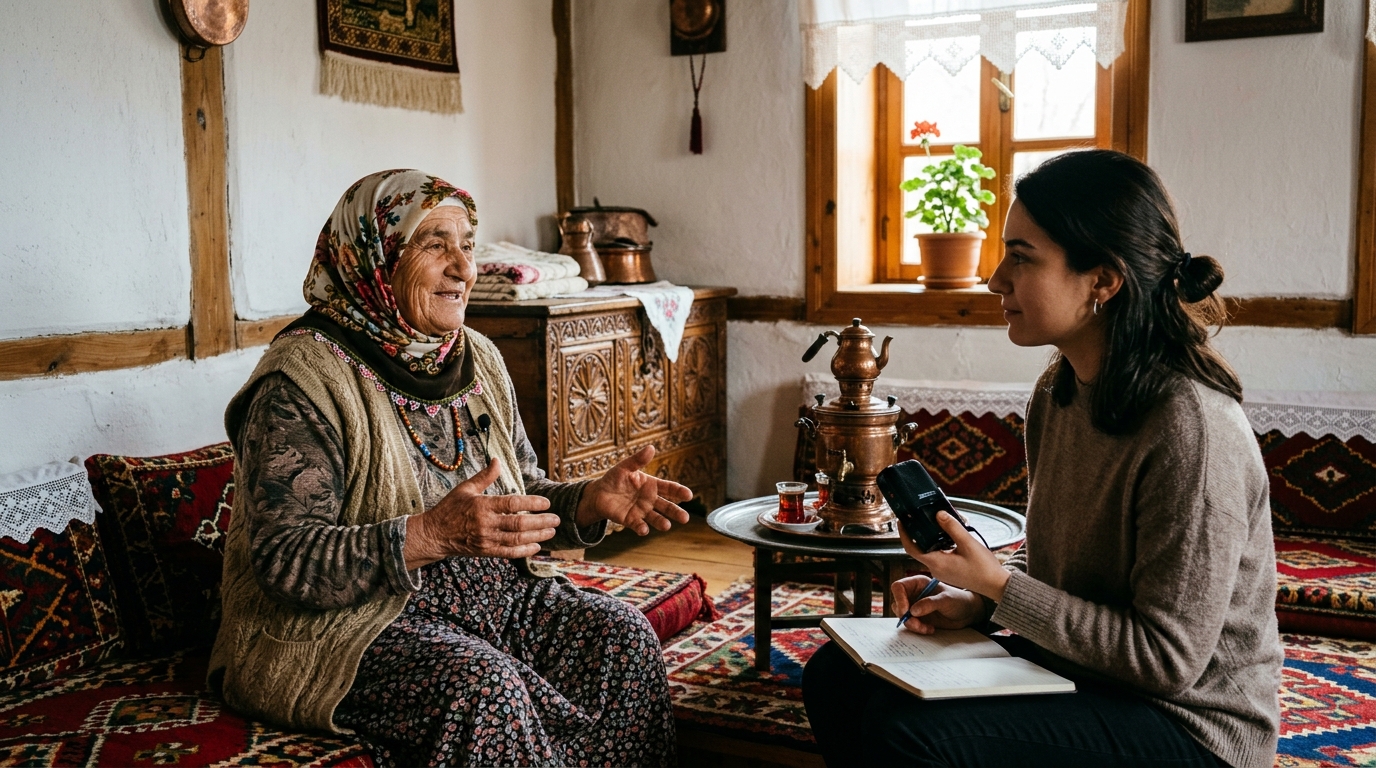
!Turkey's Living Atlas of Oral History and Ethnography
The memory of a nation is not kept only in stone inscriptions, archive documents or library shelves. The real living history; It breathes in the fairy tale that a village grandmother tells to her grandson, in the melody that a highland shepherd blows on his pipe, in a lament burned at the tandoor, and in the archaic words used by a farmer who has been cultivating the land for centuries. Language is a society's way of perceiving the world, expressing its emotions and connecting with nature.
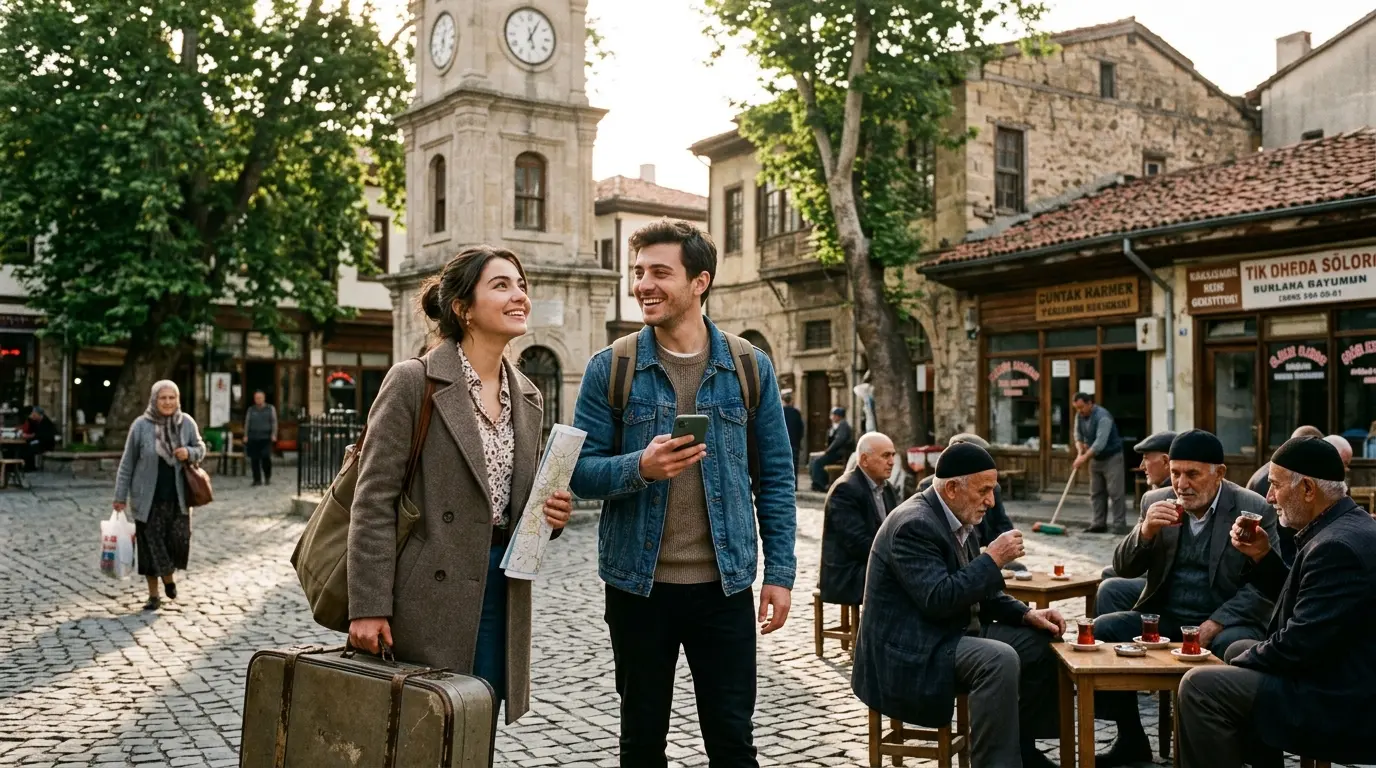
Turkey; It is an extraordinary mosaic of dialects and ethnography formed by hundreds of tribes, tribes and migration waves extending from the ancient Turkish roots carried from Central Asia to the Seljuk and Ottoman civilization melting pot, from the Caucasus to the Balkans and Mesopotamia. From the cheerful and sincere *"Gari"* of the Aegean to the enthusiastic *"Ula"* of the Black Sea, from the dignified Dadaş style of Erzurum to the rich natural dictionary of the Çukurova Yoruks, each district keeps its own language universe alive.
However, today, when television, social media and digital standardization surround every aspect of life; Local dialects are considered "vulgar" and forgotten, village chamber assemblies are dispersed, and centuries-old ancient words are lost to the ground with the passing of the older generation. My Memleketim, by recording the oral history, local words, laments, poems and ethnographic items living in 81 provinces of Türkiye, carries out the "973 District Living Oral History and Ethnography Atlas" project. has been implemented.
1. The Richness of Language: Anatolian Dialect Zones
The richness of Turkish is hidden in the nuances offered by local dialects. While there is only one word in the standard language to describe a concept, dozens of different words have been derived in Anatolian dialects depending on the situation of that concept:
Abstract Turkish verbs and natural descriptions are preserved in their purest form; The generation dominated by soft vocal transitions and sincere addresses.
Speaking with the tempo of the waves of the sea and the steep slopes; The lifeblood of humor, clever jokes and throwaway folk songs.
Warm friendship addresses, generosity and bravery jargon that melted the harshness of winter on the Erzurum, Kars and Bayburt line.
The philosophical depth, humility and sad heart language coming from the saz of Neşet Ertaş in the steppes of Kırşehir, Yozgat and Konya.
2. Disappearing Dictionary: Forgotten Ancient Words
Rare concepts that can hardly be explained with a sentence in modern language, but are accurately expressed with a single word in Anatolian villages:
Words Expressing Emotions and States
- To be content: To find it difficult to do a job, to be lazy or to have a hard time.
- To be heartbroken: To be upset inside without showing it, in a reproachful way to show resentment.
- To be offended: To be crushed under a word or behavior, to react with a feeling of guilt.
- To be offended: To be mentally overwhelmed, to experience inner distress, to feel upset to be constricted.
- To be stunned: To be surprised by an unexpected situation and not know what to do.
Ethnographic Items and Village Life Terms
- Teşi (Kirmen): Hand spindle used to spin wool into thread.
- Terek: Wooden wall lined with copper pots in village rooms and kitchens shelf.
- Triver: Three-legged iron circle used to place pots or pans on the fire.
- Çeten: For animals to eat hay basket woven from hedges.
- Jump: Copper container with handle used to carry water from the fountain and to heat water on the stove.
3. Village Room Culture: Assembly of Oral Memory
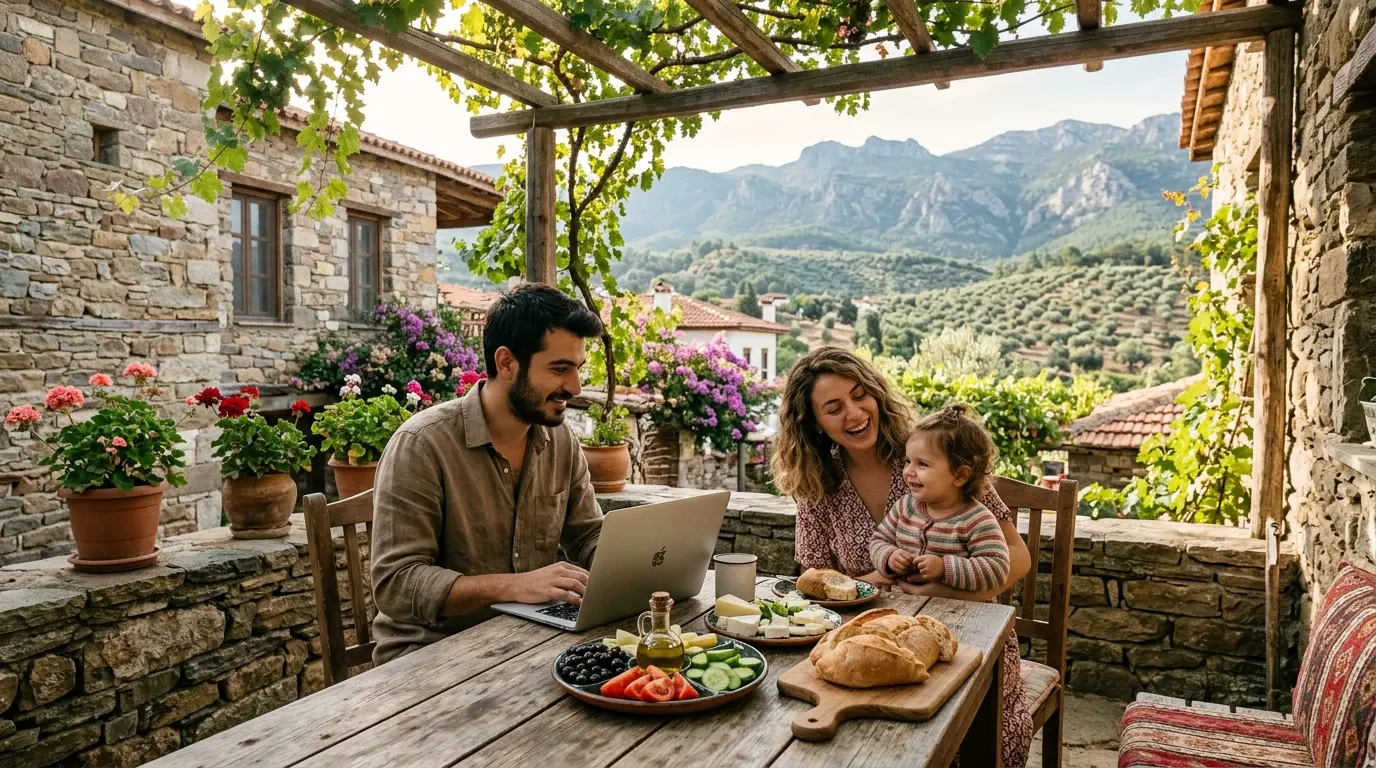
Village chambers are the unofficial public universities of Anatolia. During the winter months, when field work is finished, the village people gather around the wood stove that is lit after the evening prayer and not only chat here; it would keep the social memory alive:
- Sira Nights and Yaren Assemblies: Sıra Nights in Şanlıurfa, Yaren in Çankırı, Kürsübaşı in Elazığ, Gezek in Kütahya Simav; These are civil schools where young people learn manners, music and cooperation from adults.
- Köroğlu and Dede Korkut Narrators: In ages when the literacy rate was low, asiks and meddahs would strengthen the nation's consciousness by telling epics to the accompaniment of saz for days.
- Imece and Fairy Tale Nights: While women gathered around the tandoor and spun wool or rolled dough, tales (Keloğlan, Zümrüd-ü Anka) and poems were passed down from generation to generation.
When you go to the village, record the youth memories of your grandfathers and grandmothers, the poems they knew and old village traditions with your phone.
Preserve or donate old wooden churns, hand mills, woven kirkits, and madder rugs to local city museums rather than selling them at a low price to antique dealers or burning them.
Register an unheard word or lament specific to your district for artificial intelligence and future generations by adding it to My Homeland Oral History Dictionary.
4. What Can You Do with My Homeland Oral History and Ethnography Module?
My Hometown offers a wealth of tools for cultural heritage researchers and local enthusiasts:
- District Based Dialect and Word Dictionary: You can listen to local expressions, audio recordings and Turkish meanings used in 973 districts of Türkiye on the interactive map.
- Ethnography Museums Guide: You can examine the living open-air and ethnography museums in every city, their working hours and the craft tools on display.
- Living Legends Integration: The mythological narratives behind the words
Folk Legends and Mythology Map. - Women's Cooperatives and Handicrafts: Weaving with centuries-old tesi and kirkits You can find women with Women's Cooperatives Atlas.
- Authentic Village Life: Villages where the village chamber culture still lives
Authentic Village and Plateau Life Guide.
5. Frequently Asked Questions (FAQ)
While dialect expresses the distinction between languages (Turkish-Azerbaijani); Dialect is the regional pronunciation and vocabulary diversity within the same country (Aegean dialect, Erzurum dialect).
The basic rules are not to interrupt the speaker, not to ask leading questions, to minimize background noise and to obtain the consent of the interviewer.
Although it has decreased with urbanization, winter conversations, sira nights and yaren assemblies are still standing as the common place of civil solidarity of the people in hundreds of villages of Anatolia.
By using the 'Cultural Memory' form in our application, you can upload the centuries-old sayings and pronunciations of your village to the system and contribute to the anonymous public memory.
Should be kept away from sunlight, moisture and pests. It should be cleaned with traditional clay water and natural methods instead of chemical cleaners.