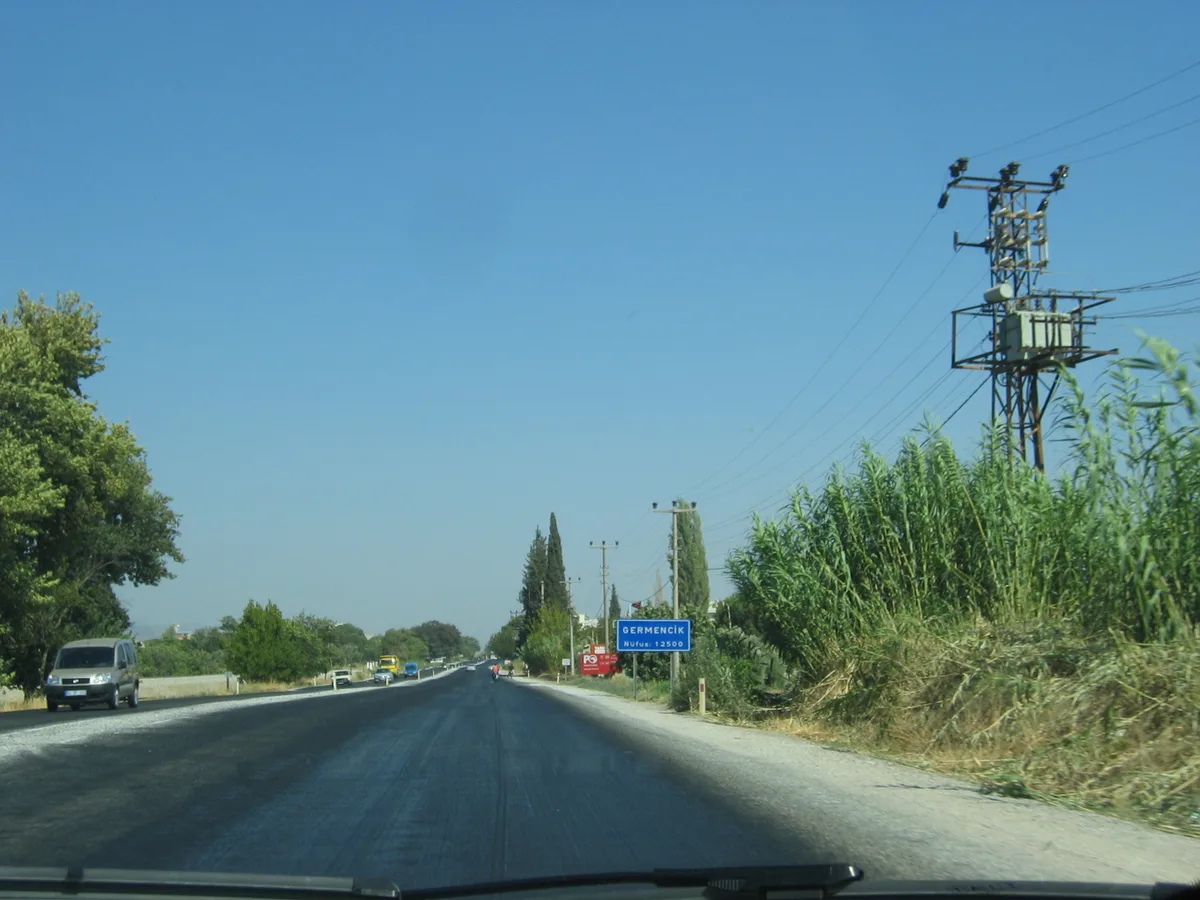
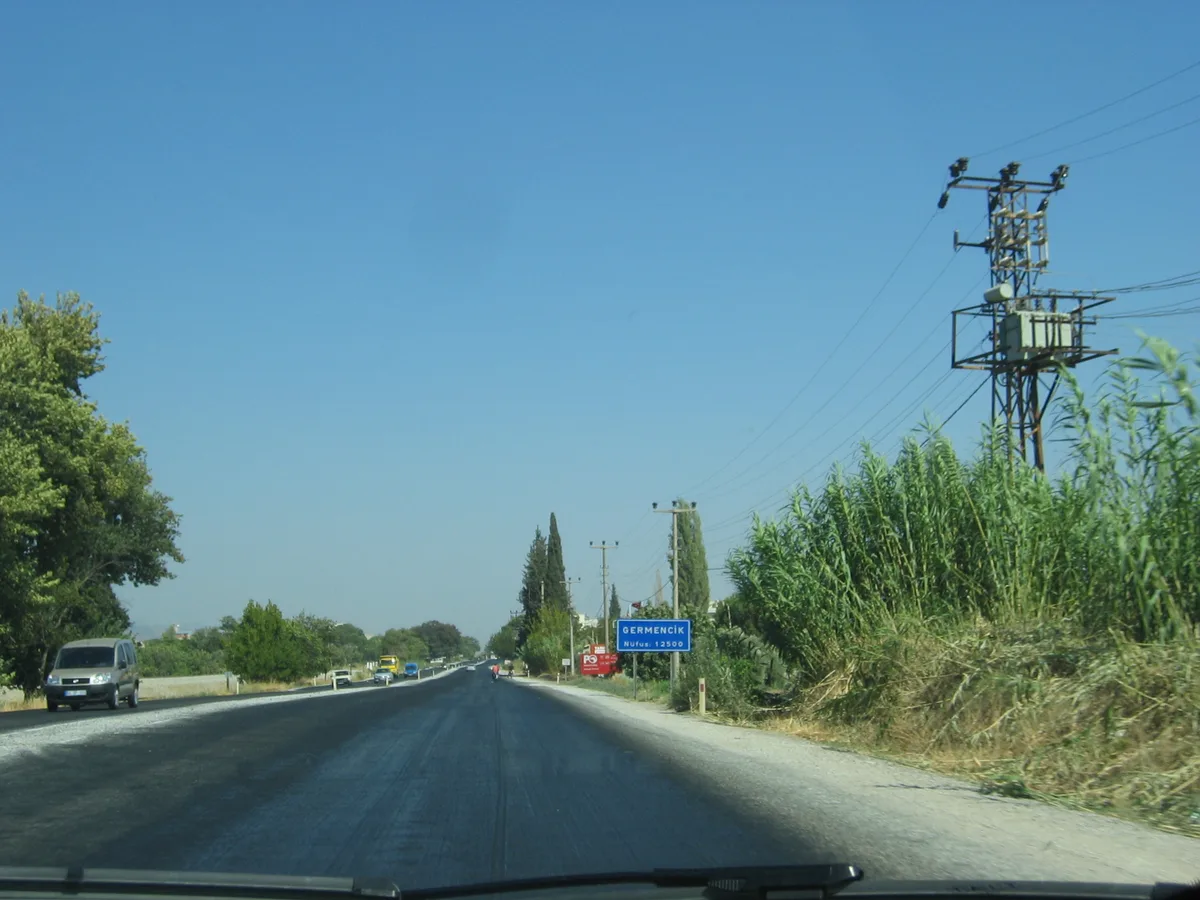
Forming a natural passageway between the fertile Meander (Büyük Menderes) Basin and the Aegean coast, Germencik has been a center of architectural brilliance, therapeutic geothermal waters, and bountiful fruit orchards for millennia. The ancient city of Magnesia ad Maeandrum, where the legendary architect Hermogenes pioneered the pseudodipteral temple design that shaped classical Roman architecture, captivates travelers with its colossal 40,000-seat marble stadium and awe-inspiring sanctuary ruins.
Alongside this extraordinary classical legacy, the district boasts the 800-Year-Old Monumental Olive Tree in Selatin village; the ancient thermal mineral baths of Alangüllü Hot Springs; the sizzling, mouth-watering phenomenon of Ortaklar Çöp Şiş skewers; the historic stone Greek basilica in Mursallı, and the world-renowned Germencik Sarılop dried figs, making it one of western Turkey’s richest cultural and culinary travel destinations.
Located in Tekinköy near Ortaklar, Magnesia ad Maeandrum was relocated to its present site in the 4th century BC by Magnetes who migrated from Thessaly. The crown jewel of the city is the monumental Temple of Artemis Leukophryene, designed by the master Hellenistic architect Hermogenes. He introduced the revolutionary 'pseudodipteral' temple plan—widely praised by Roman architectural theorist Vitruvius—flanked by elegant Ionic marble columns, relief-carved epistyles, and sacred sacrificial altars.
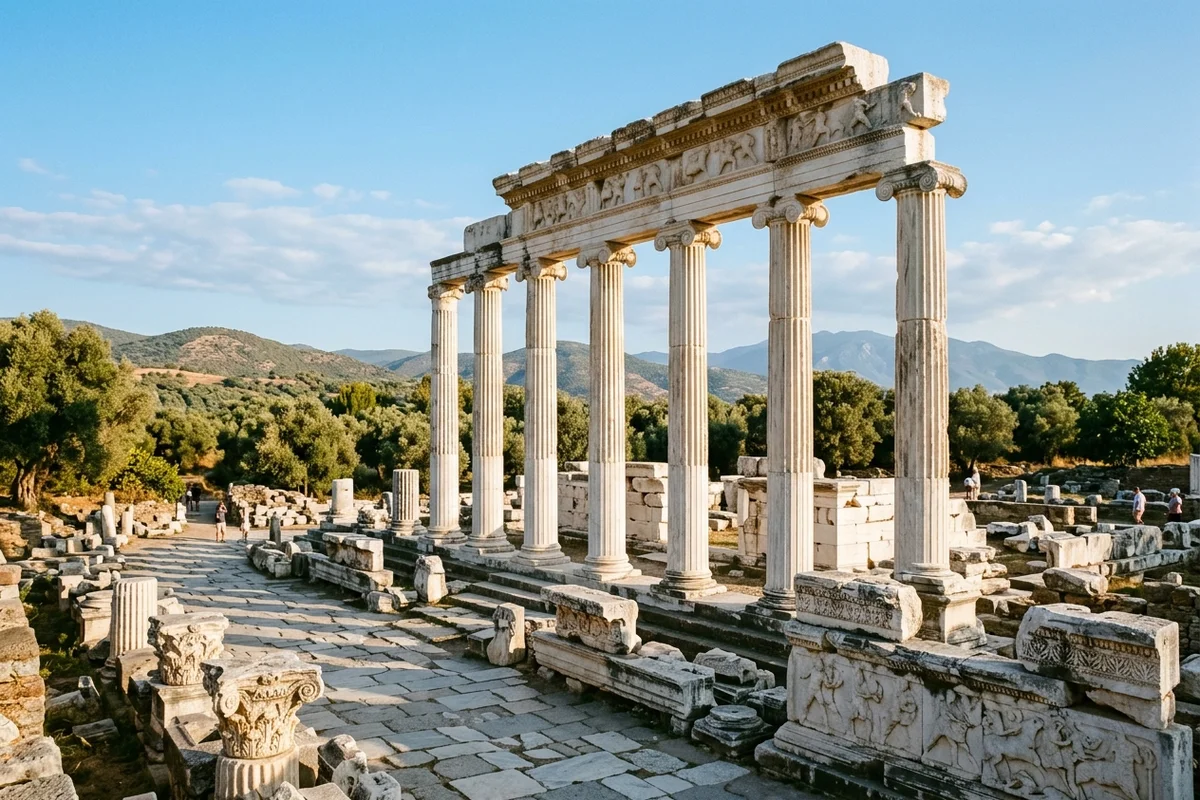
Visitor Insights: Temple of Artemis Leukophryene
- Location: Ortaklar-Söke highway, Tekinköy area, Germencik, Aydın
- Architectural Triumph: Pseudodipteral temple blueprint developed by master architect Hermogenes in the 2nd century BC
- Key Features: Sacred temenos precinct, monumental Agora gate, propylaea, and altar foundations
- Visiting Hours: Open daily with Museum Pass (Summer: 08:30 - 19:30, Winter: 08:30 - 17:30)
Widely celebrated by archaeologists as a miracle of preservation, the Ancient Stadium of Magnesia survived virtually intact thanks to centuries of protective river silt deposits. Boasting a massive seating capacity of roughly 40,000 spectators, this marble amphitheater hosted gladiatorial combats, wild beast hunts, and four-horse chariot races. The carved reliefs along the podium walls depicting athletic crowns, gladiators, and racing factions (Blues and Greens) are completely unique in classical antiquity.
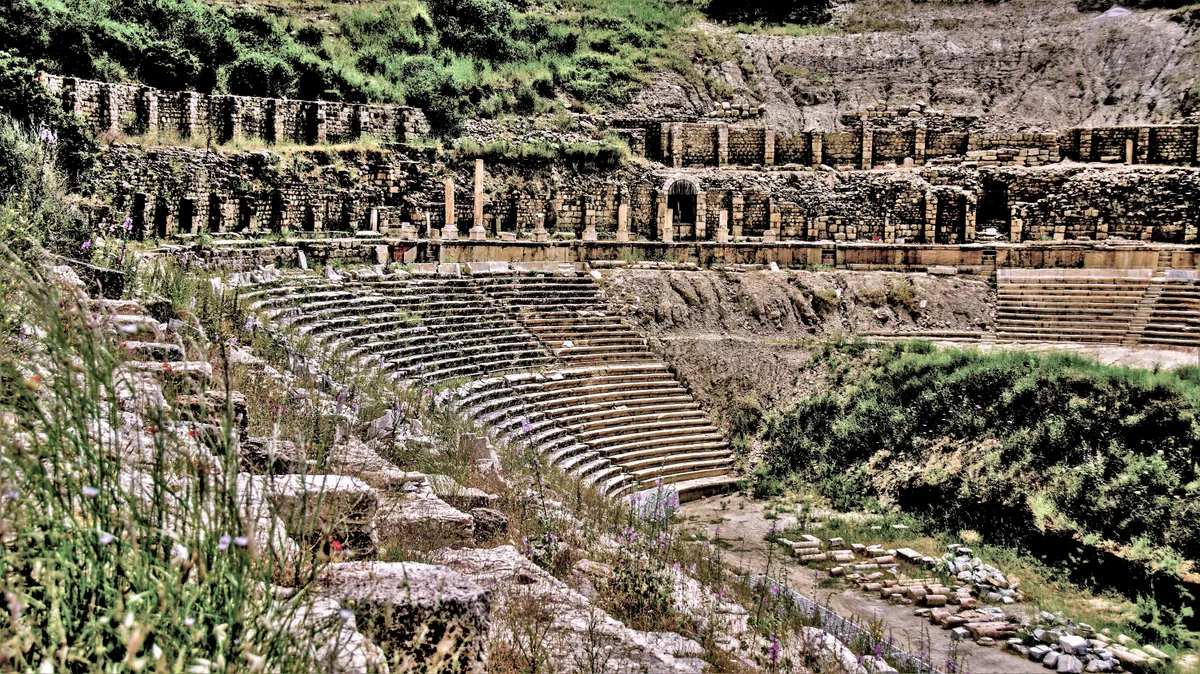
Magnesia Stadium Factsheet
- Capacity: 40,000 spectators on tiered white marble cavea seats
- Historical Function: Leukophryene games, athletic competitions, gladiatorial battles, and chariot races
- Distinctive Artwork: Podium wall reliefs honoring victorious athletes, gladiators, and racing teams
- Preservation: Unrivaled global condition due to deep alluvial silt protection over millennia
Resting against the southern hillside of the acropolis, the Theater of Magnesia is a classic Hellenistic design carved naturally into the valley slope. Though partially covered by earth from ancient slope movements, its orchestra and scenic building foundations are distinctly discernible. In front of the theater lies the grand Market Basilica, a colossal judicial and commercial hall that illustrates the flourishing mercantile life of Roman Magnesia.
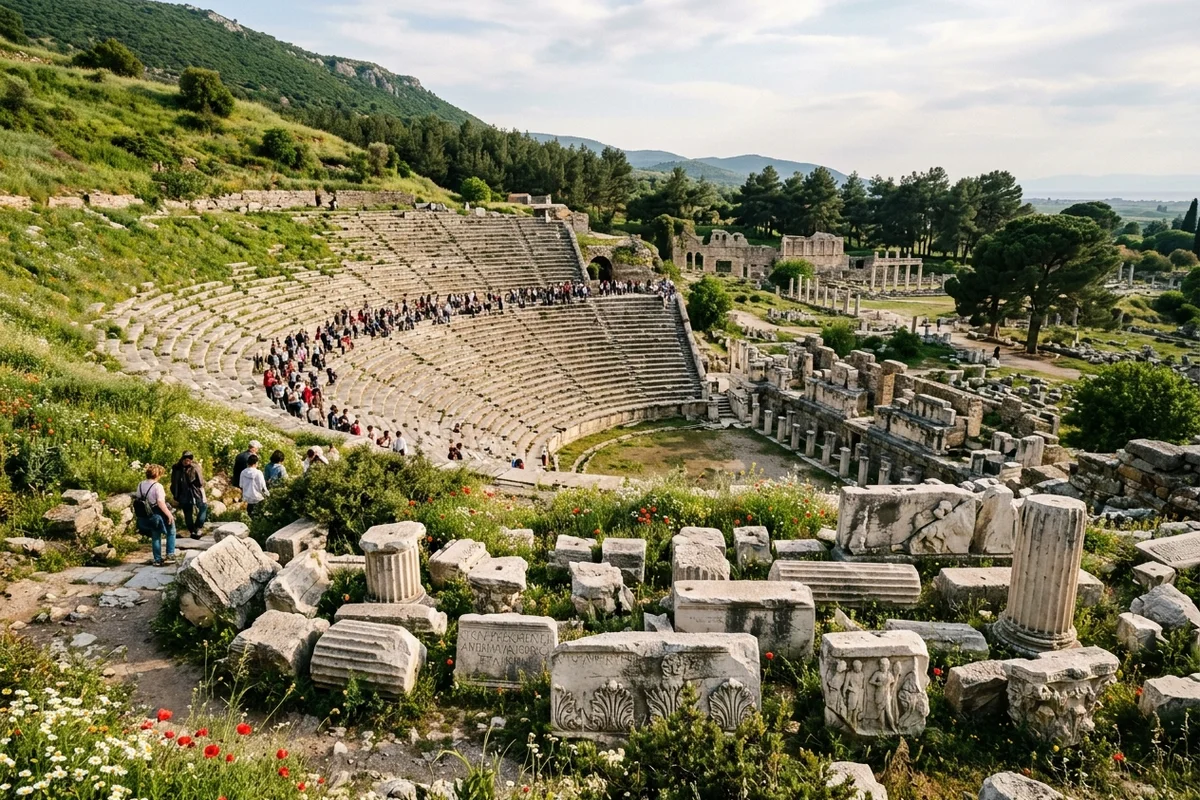
Theater & Basilica Highlights
- Setting: Southern hillside slope below the ancient acropolis of Magnesia
- Architecture: Hellenistic open-air theater expanded during the Roman Imperial era
- Market Basilica: Grand commercial and civil court hall adjacent to the city’s agora
- Photography Tip: Climb the upper cavea tiers for a panoramic view sweeping across the entire valley
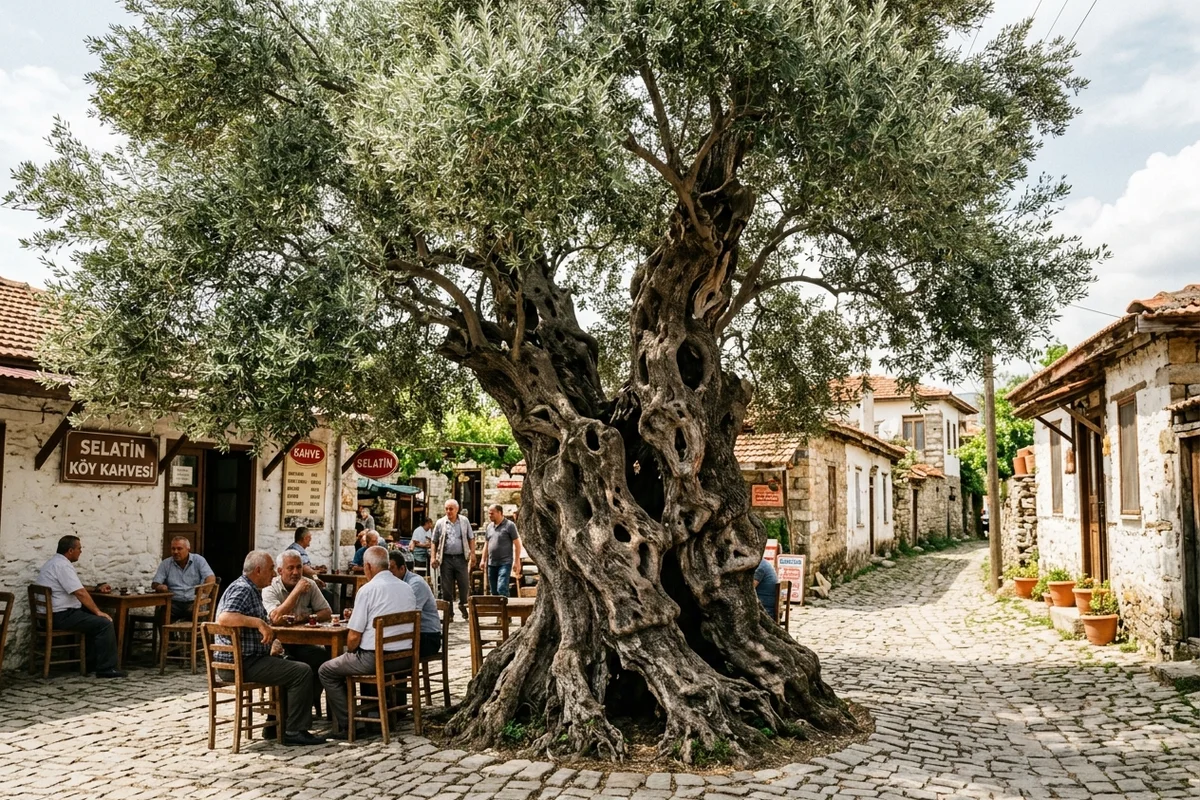
Standing proudly in the village square of Selatin, tucked into the foothills of the Aydın Mountains, the 800-Year-Old Monumental Olive Tree is officially registered as one of Anatolia’s oldest living organisms. With a colossal, twisted trunk perimeter reaching several meters and hollowed mystical cavities, this ancient tree continues to yield fruit. Sitting at the rustic village cafe beneath its sprawling canopy, sipping freshly brewed tea, is an authentic journey into timeless Aegean tranquility.
Selatin Monumental Tree & Village Profile
- Tree Age: Officially certified at approximately 800 years (Olea europaea)
- Village Heritage: Traditional stone architecture, cobblestone paths, and organic farm stands
- Village Cafe: Freshly brewed mountain sage tea, menengic coffee, and wood-fired Turkish coffee
- Local Shopping: Cold-pressed early-harvest extra virgin olive oil, cured olives, wild thyme, and tarhana
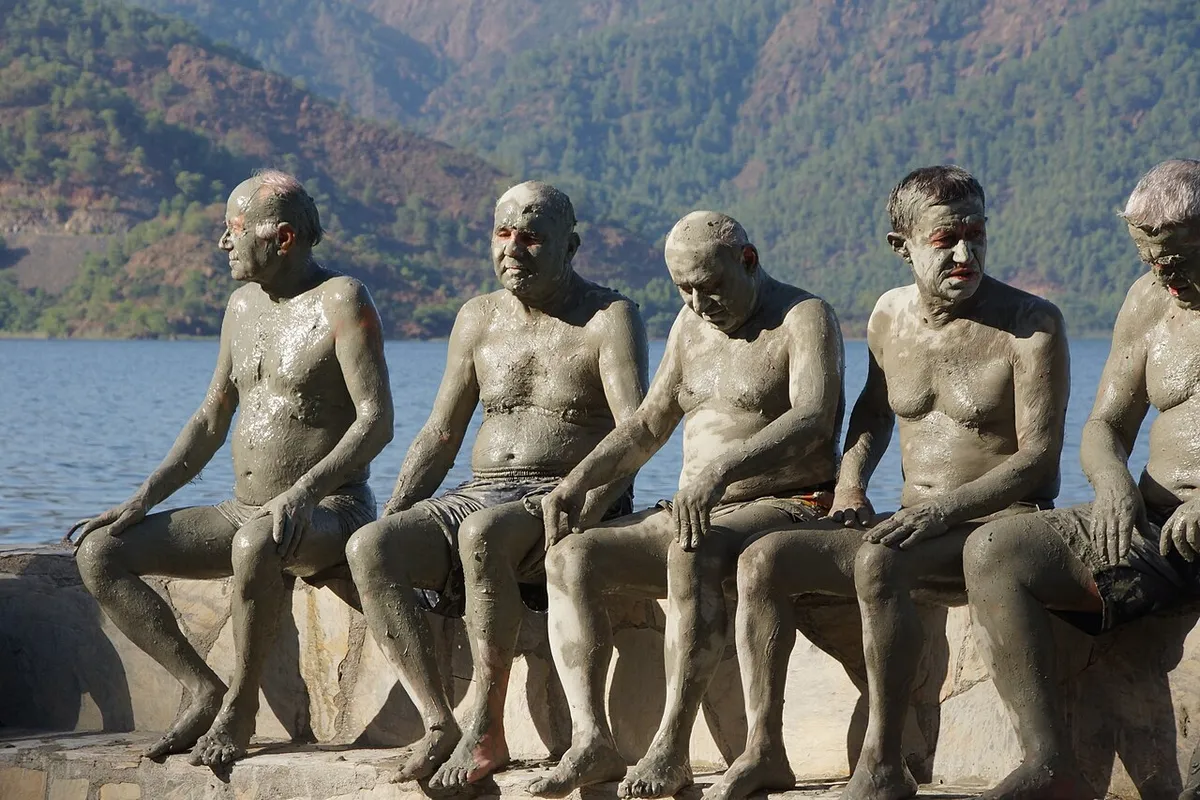
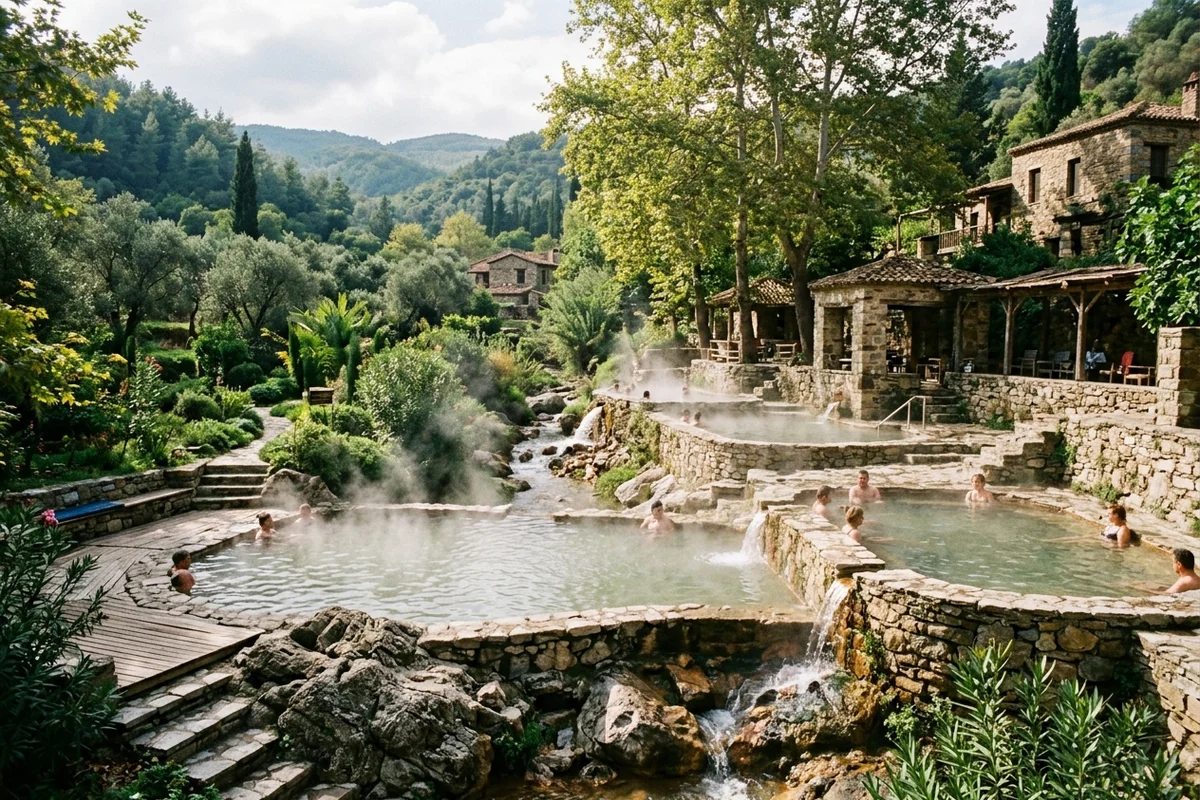
Bubbling up in a tranquil mountain gorge framed by pine and eucalyptus trees 11 km north of Germencik, Alangüllü Thermal Springs has provided natural healing since Roman times. Rich in sodium bicarbonate, fluoride, and hydrogen sulfide, the geothermal waters emerge at temperatures between 65°C and 72°C. Outdoor stone pools, private thermal baths, and mineral mud treatments offer rejuvenating wellness amid lush Aegean nature.
Alangüllü Thermal Guide
- Distance: 11 km north of Germencik town center
- Water Temperature: 65°C - 72°C at source; tempered to 38°C - 42°C in public and private pools
- Therapeutic Profile: High fluoride, sodium bicarbonate, natural sulfur, and medicinal mud therapy
- Amenities: Day-use thermal pools, family bath pavilions, scenic hiking trail, and picnic areas
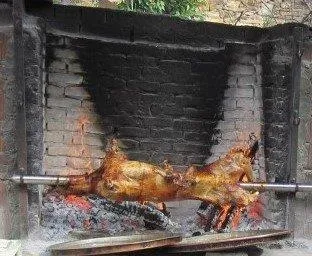
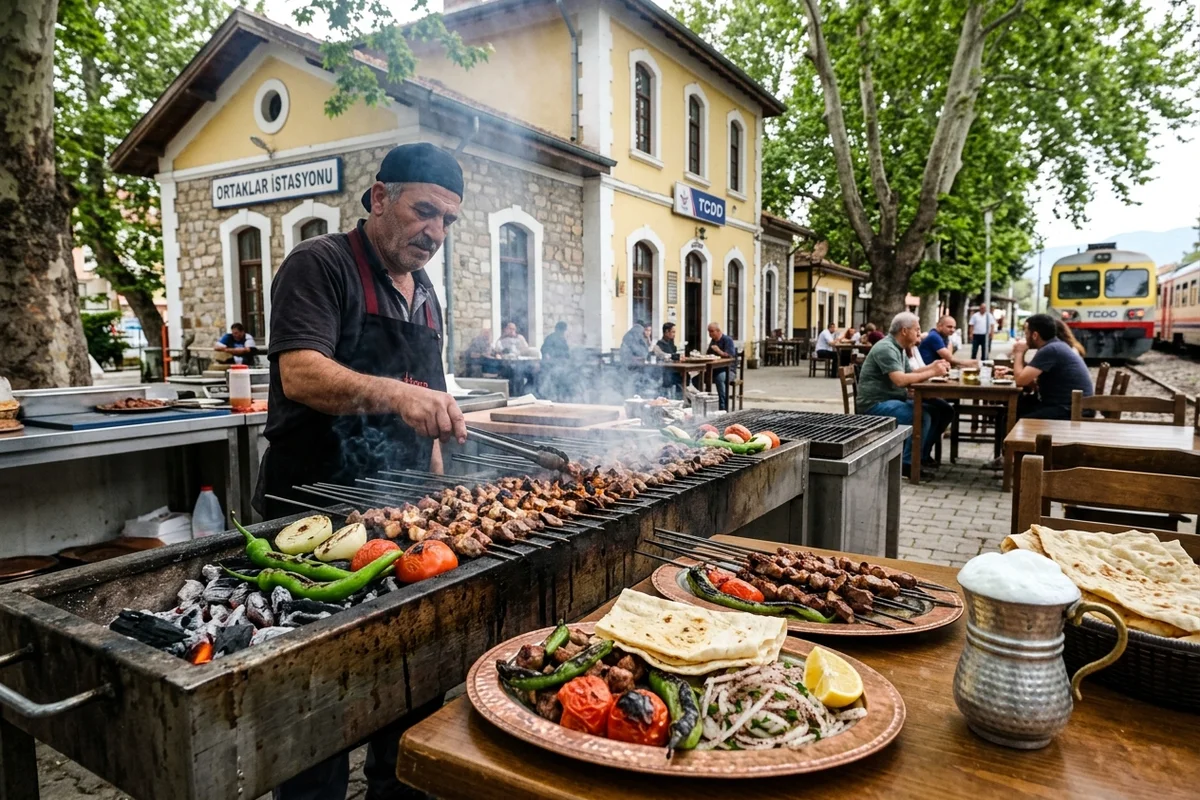
A historic rail junction built in the 1880s by the British Ottoman Railway Company, Ortaklar is equally renowned for originating one of Turkey’s most beloved culinary traditions: Ortaklar Çöp Şiş. Tender chunks of marinated milk-fed lamb, threaded onto delicate wooden skewers, are flash-grilled over blazing oak charcoal. Served with wood-fired flatbread, charred green peppers, sumac-rubbed onions, and frosty churned ayran, it is an essential gourmet pilgrimage.
Ortaklar Çöp Şiş Gourmet Guide
- Culinary Craft: Lean, sinew-free milk-fed lamb cut into bite-sized morsels threaded on bamboo skewers
- Grilling Secret: Flash-seared over intense oak embers for a few minutes to retain luscious juiciness
- Classic Accompaniments: Charred Sivri peppers, blistered tomatoes, warm flatbread, sumac onions, frothy ayran
- Heritage Setting: Historic stone railway station square established in the late 19th century
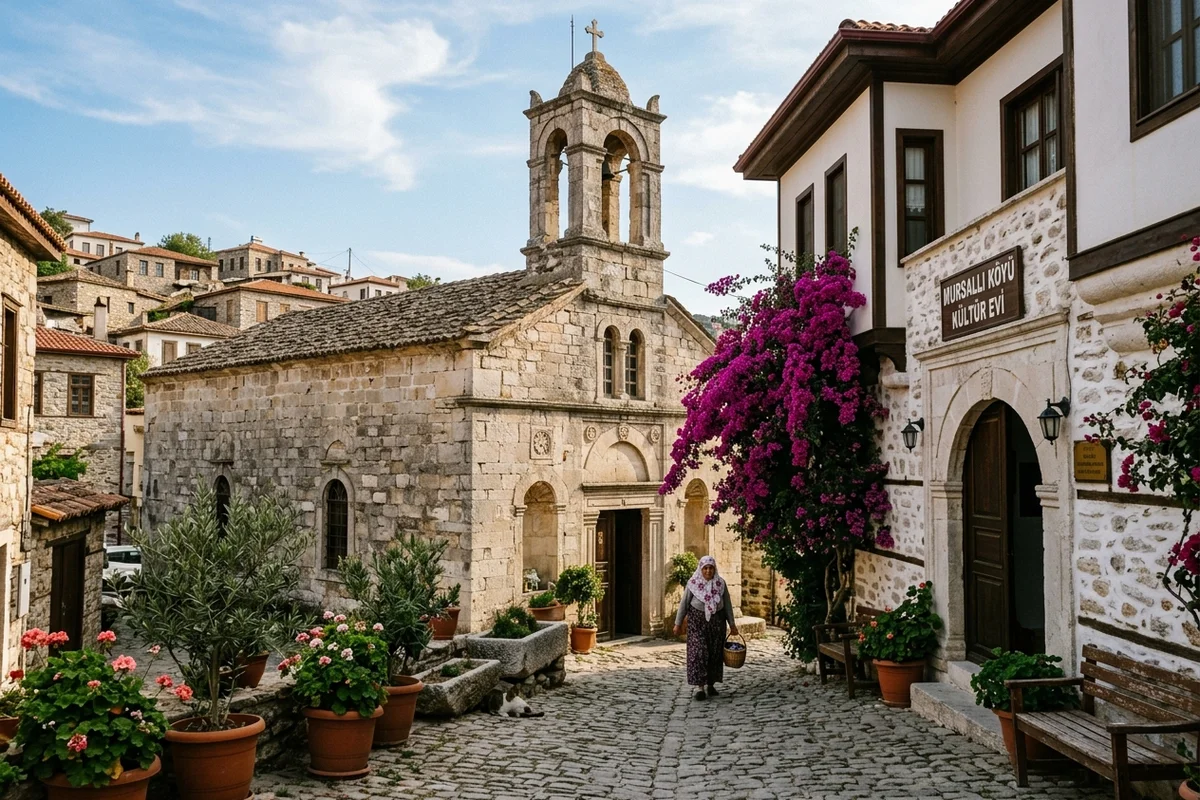
One of the most picturesque settlements in Germencik, Mursallı village features beautifully preserved 19th-century Greek stone mansions and the historic Mursallı Greek Church. Lovingly restored as a village cultural center, this ashlar stone basilica with arched windows, elegant bell tower, and cascading bougainvillea offers an evocative window into the multi-ethnic heritage of the pre-population exchange Aegean.
Mursallı Village Visiting Notes
- Location: 6 km west of Germencik town center
- Architecture: 19th-century Ottoman-Greek stone masonry with carved lintels and wooden oriels
- Cultural Center: Exhibits historical farming tools, vintage photos, and ethnographical artifacts
- Setting: Tranquil village enveloped by olive groves, fig orchards, and lush vineyards
During the turbulent years of the Turkish War of Independence, Germencik was the scene of fierce patriotic resistance. Erected in solemn tribute to the local heroes who gave their lives during the liberation of the town on September 7, 1922, the Kanlıbahçe Martyrs Memorial is a revered sanctuary. With its striking white marble monument, bronze reliefs, proud crimson Turkish flag, and peaceful cypress grove, it stands as an enduring tribute to national courage.
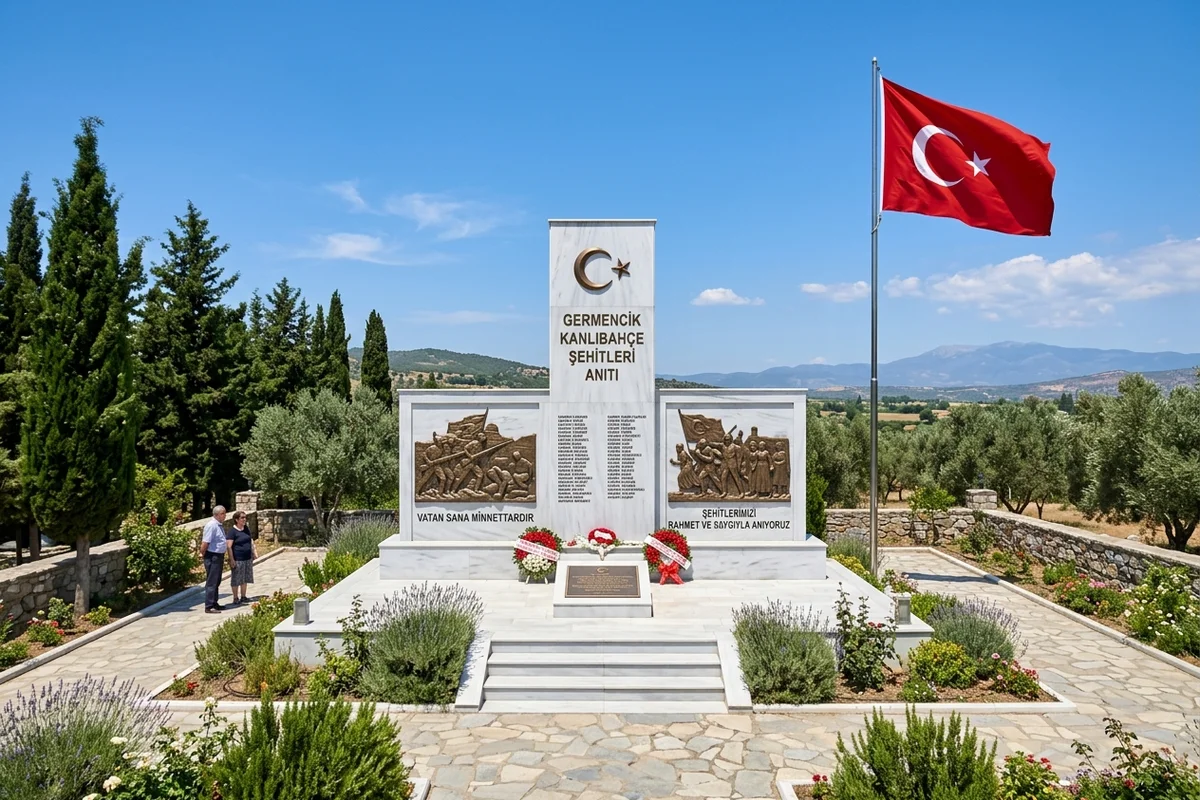
Kanlıbahçe Memorial Profile
- Historical Event: Martyrs of the September 7, 1922 Germencik Liberation Campaign
- Monument Design: Bronze sculptural friezes, inscribed marble stele, and ceremonial courtyard
- Commemoration Day: Annual official ceremonies held every September 7
- Visiting Etiquette: A dignified place of memory visited with respectful silence and contemplation
Widely recognized as producing the finest quality dried figs on earth, Germencik bursts into vibrant life each autumn during the Historic Fig Market. In the bustling town square shaded by centennial plane trees, wooden stalls and wicker baskets overflow with luscious honey-gold Sarılop dried figs, fresh green figs, fig rolls, and artisanal fig preserves. Savoring a glass of Turkish tea here lets travelers immerse themselves in centuries of agricultural pride.
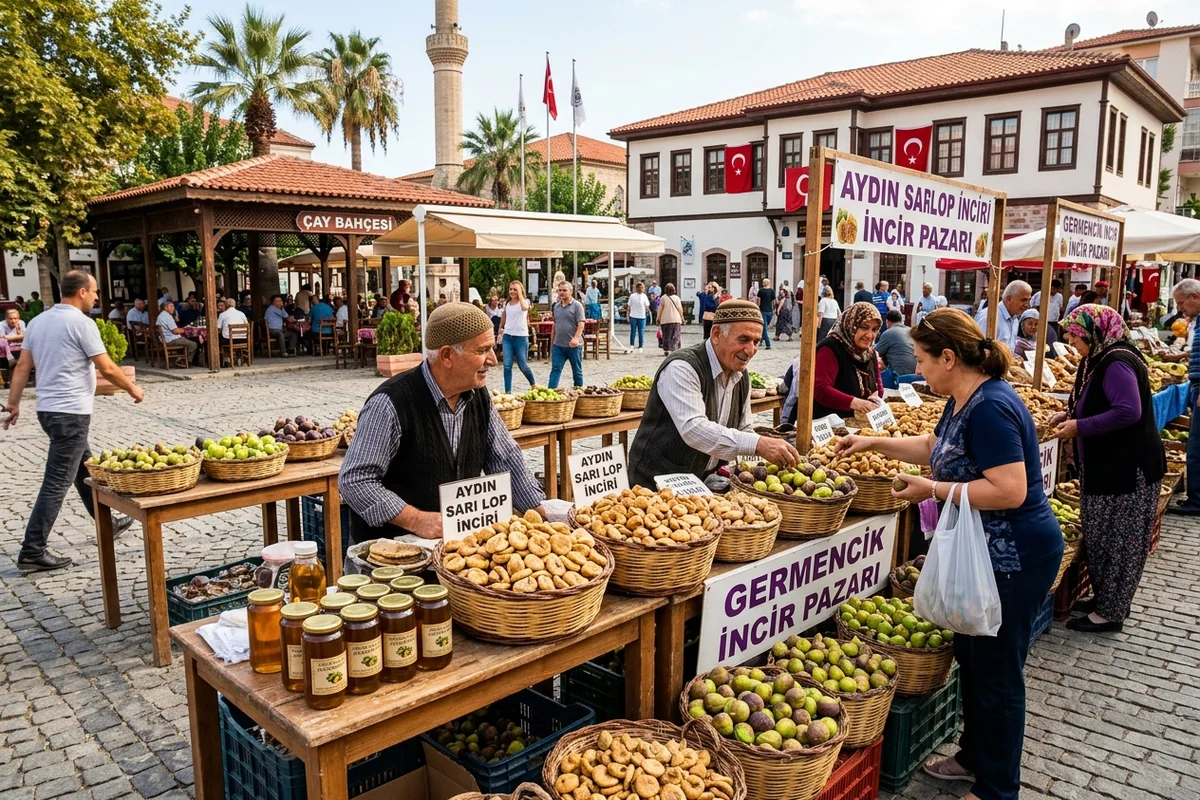
Germencik Figs & Town Market Notes
- Geographical Indication: Aydın Sarılop Fig, boasting the highest natural honey and sugar content globally
- Drying Technique: Naturally sun-dried on wooden racks (kerevet) after ripening and falling from branches
- Prime Season: Late August through November for freshest new-harvest dried figs
- Artisanal Products: Golden dried figs, fresh bardacık figs, fig pestil, and extra virgin olive oil
Perched high in the Aydın Mountains 14 km above Germencik, the mountain village of Dağyeni presents a breathtaking landscape of terraced fig orchards. In autumn, hillsides glow with hundreds of wooden sun-drying racks laden with glistening golden figs. From the village observation terrace, travelers can gaze across the vast panorama of the fertile Meander Valley, breathing in crisp mountain air infused with fig blossom and pine.
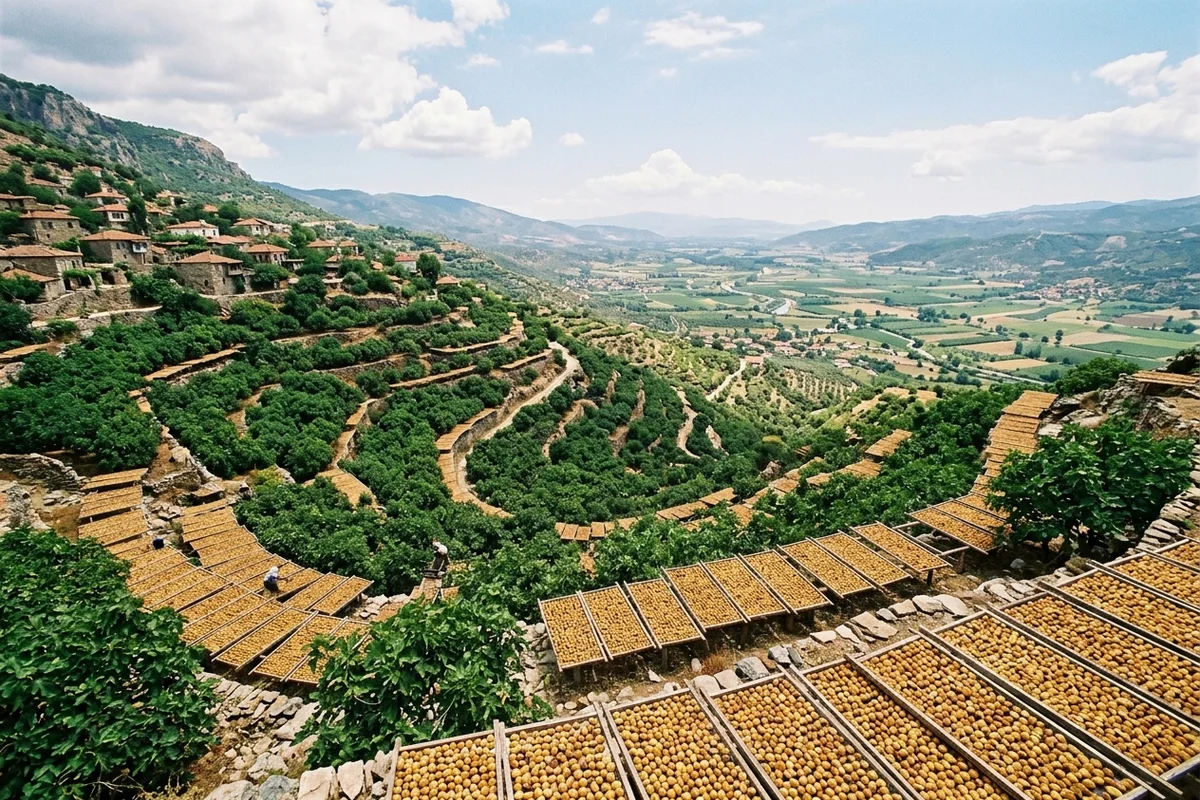
Dağyeni Village & Scenic Terrace Guide
- Location: 14 km north of Germencik town center via scenic mountain road
- Altitude & Climate: 650 meters elevation with cool mountain breezes and pristine microclimate
- Visual Spectacle: Thousands of wooden racks drying golden figs against sweeping green valley views
- Activities: Landscape photography, scenic trekking, and buying premium mountain figs direct from growers
Recommended Travel Itineraries for Germencik & Magnesia (1-Day and 2-Day)
| Time Slot | 1-Day Express Route | 2-Day Complete Discovery Route |
|---|---|---|
| Morning (09:00 - 12:30) | Magnesia Ancient City: Temple of Artemis & 40,000-seat Stadium | Day 1: Comprehensive Magnesia exploration (Temple, Stadium, Theater, Basilica) |
| Lunch (12:30 - 14:00) | Charcoal-grilled Ortaklar Çöp Şiş feast at historic Station Square | Traditional Ortaklar Çöp Şiş skewers and chilled frothy ayran break |
| Afternoon (14:00 - 18:00) | Selatin 800-year-old tree, village tea house, and Germencik Fig Market | Day 1: Mursallı Greek Church, Kanlıbahçe Memorial, and Selatin village |
| Day 2 (Full Day) | - | Day 2: Rejuvenating soak at Alangüllü Hot Springs, Dağyeni fig terraces & viewpoint |
Frequently Asked Questions About Germencik & Magnesia (FAQ)
How do I get to Magnesia Ancient City?
Magnesia is located along the Ortaklar-Söke highway, just 4 km from Ortaklar town. Regular minibuses run from Aydın, Söke, and Kuşadası. By car, it is a 5-minute drive from the Ortaklar exit of the Izmir-Aydın highway.
Why is the Magnesia Stadium considered so extraordinary?
Because it was buried under deep alluvial river silt for centuries, it was shielded from stone looting and weather erosion. With 40,000 intact marble seats and detailed athlete reliefs, it is the best-preserved stadium from classical antiquity.
What was architect Hermogenes’ significance in world history?
Hermogenes was the pioneering Greek architect who standardized classical column proportions and created the pseudodipteral temple layout. His Temple of Artemis at Magnesia directly inspired Roman architect Vitruvius’ foundational treatises.
How old is the monumental olive tree in Selatin?
The monumental olive tree in Selatin village square is officially certified as approximately 800 years old. It has been thriving and bearing olives since the Seljuk period.
What makes Ortaklar Çöp Şiş skewers unique?
They are made from carefully trimmed milk-fed lamb, threaded on slender wooden skewers and seared over intense oak coals in minutes to lock in natural juices, served with fire-roasted peppers and frothy ayran.
When is the best time to purchase Germencik dried figs?
The freshest harvest arrives between September and November. Visitors can purchase premium sun-ripened mountain figs directly from growers at the Historic Fig Market in Germencik square.
From Hermogenes’ timeless temple architecture to the breathtaking tiers of the 40,000-seat stadium, and from Selatin’s centennial tree to the sizzling aroma of Ortaklar skewers and Dağyeni’s sun-drenched fig terraces, Germencik is a premier Aegean treasure trove. Make sure to include this extraordinary destination in your upcoming Western Anatolia journey!